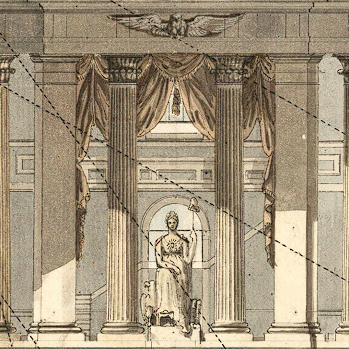
Giuseppe Franzoni was meant to carve his Liberty Statue from Vermont marble for the Hall of Representatives following 1814; however, he died in 1815. His plaster model was destroyed mere months after its completion in 1814 during the British Burning of Washington. The sculpture was intended to depict Lady Liberty alongside symbols of America.
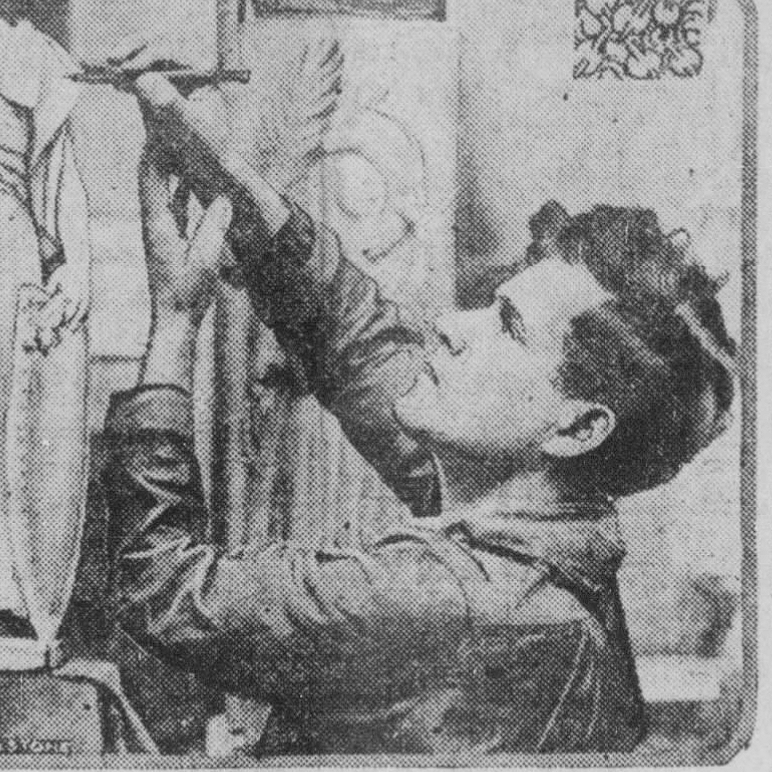
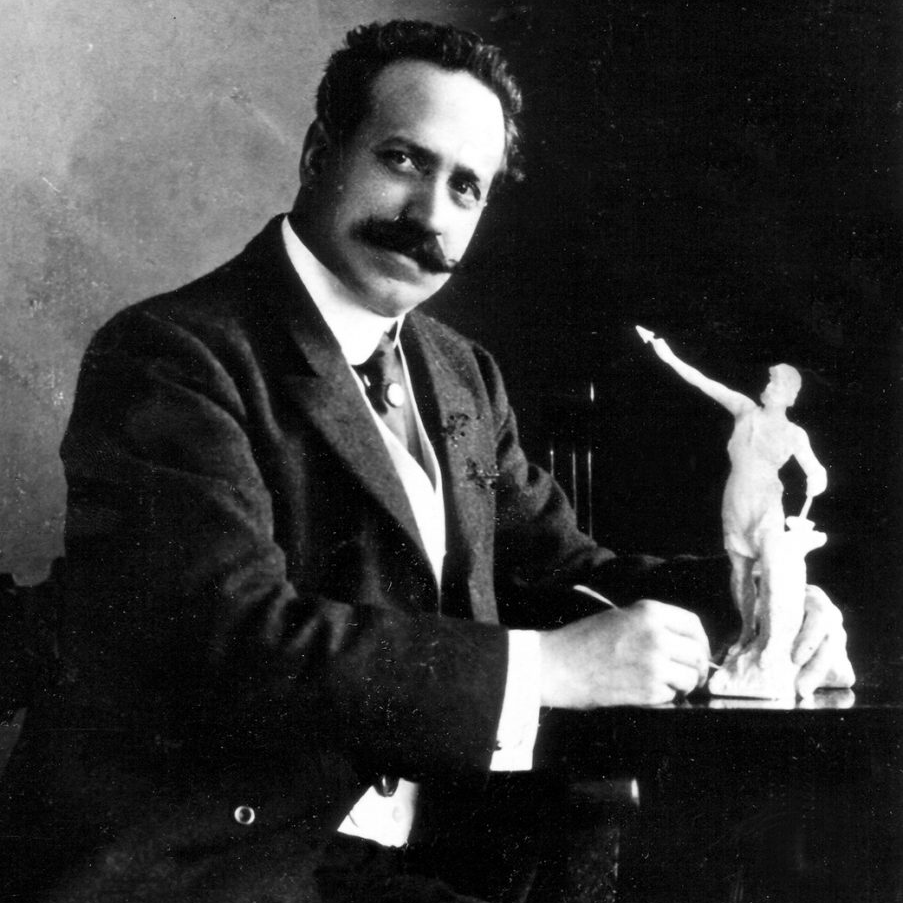
Leo Lentelli, born in Bologna, Italy in 1879, studied art in both Bologna and Rome. He moved to America in 1903 and would become a U.S. Citizen. He taught in New York and San Francisco while working on sculpture. He did work in D.C., Virginia, and California. He moved back to Rome with his family in 1955, where he passed away in 1961.
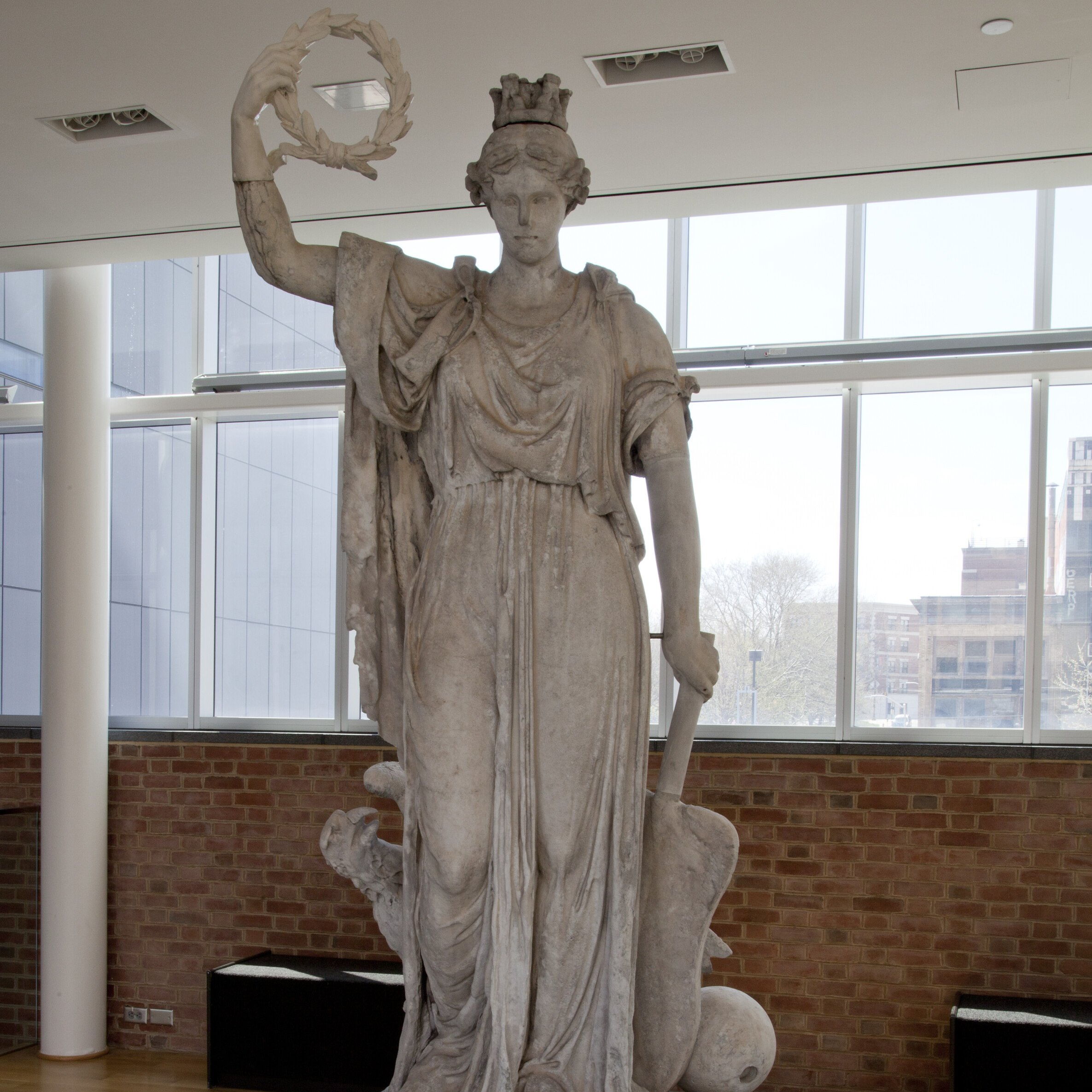
Antonio Capellano carved parts of the Baltimore Battle Monument in 1822, including a Carrara marble statue of a Roman matron called "Lady Baltimore." The original statue was replaced in 2013 and moved to the Maryland Historical Society, where it remains on display.
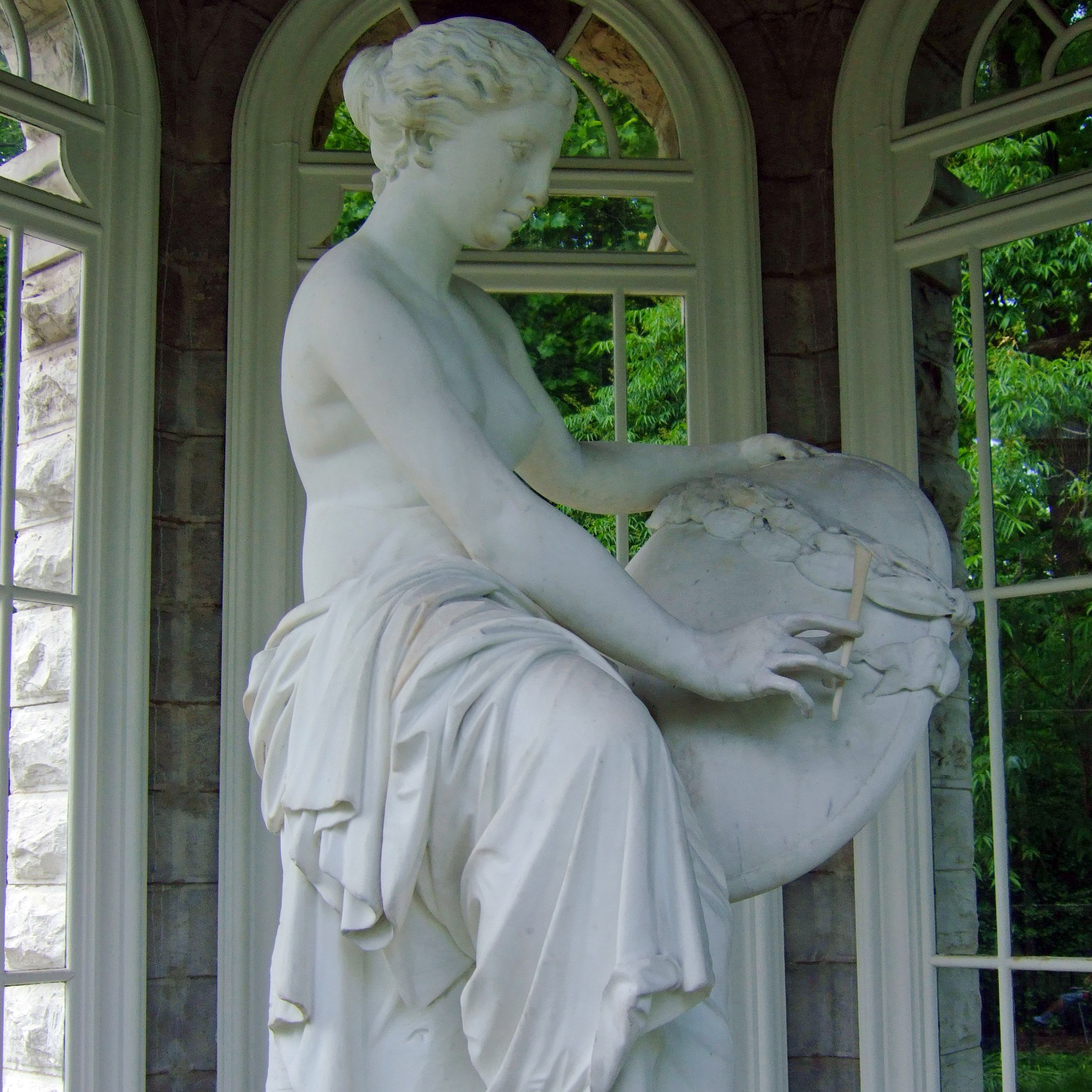
The statues of Juno and Victory at the Missouri Botanical Garden were carved from Carrara marble by Carlo Nicoli in 1886. Juno is depicted as a classical Roman woman in robes, while Victory is a replica of Cincenzo Consani's Victory located in Florence. Henry Shaw had the statues moved to St. Louis, and following his passing, Juno was repositioned nearer to his former residence.
Born in 1885 in Sulmona, Italy, James Novelli's family immigrated to the United States around 1890. He was sent back to Italy in 1903 to study art and sculpture. He returned to the U.S. after his studies and had some success as a carver in the 1920s, working mostly in Bronze. The Great Depression kept him from further success and is believed to have pushed him to take his own life in 1940.
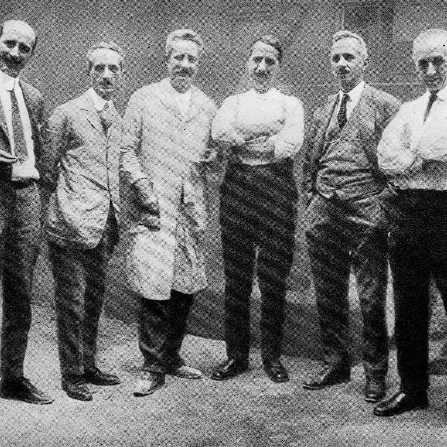
Giuseppe Piccirilli, born in 1844 in Massa, Italy, immigrated to the United States in 1888. He brought with him his six sons, and together they opened a workshop in Brooklyn, New York. His push to have his sons follow him in the art of sculpture led to the family being recognized as shapers of the monuments in one of the U.S.'s biggest cities. He unfortunately passed away in 1910 before a great deal of their success was realized.
Giuseppe Moretti, born in Siena, Italy in 1857, studied sculpture in Florence. He moved to the United States in 1888, but kept his workshop in Florence. He moved to Alabama after working with the state's marble and proclaiming it a superior quality to most marble. He purchased a quarry in Alabama to hope to push it as a medium that could challenge Italian marble. Like many artists from Italy, he retired back to his home country where he passed away in 1935.
Giuseppe Franzoni, born in Carrara, Italy in 1776, trained in sculpture with his brother Carlo. In his youth he worked around Florence, with upkeep efforts of major sites and emigrated to the United States with his brother-in-law Giovanni Andrei in 1806. He contributed to the architectural elements of the Capitol, much of which was destroyed in 1814 during the British Burning of Washington. He died unexpectedly in 1815.
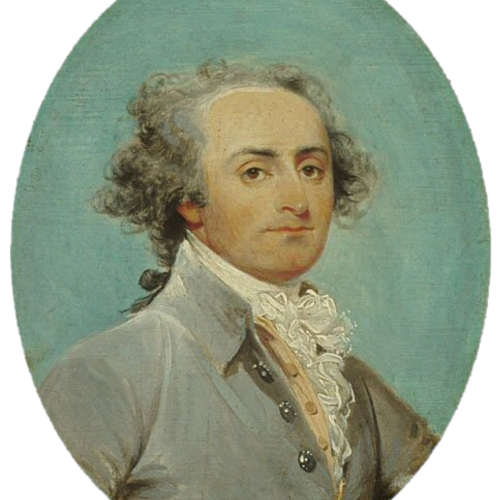
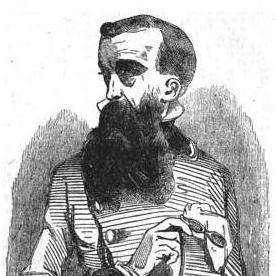
Giuseppe Céracchi was born in 1751 in Rome where he studied at the Accademia di San Luca. Céracchi was a supporter of the revolutions in the United States and France. Arriving in America in 1791, he created a series of busts of American founders while attempting to obtain funding for a grand monument of "American Liberty." He was executed via guillotine in 1801 due to his part in the plot to execute Napoleon Bonaparte.
Giovanni Carlo "Charles" Micali, born in Livorno, Italy in the 1770s, worked with the Tuscany Funerary Monument Makers Association early in his career. He built a reputation and was personally sought to create the Tripoli Monument, the first monument in Washington D.C. It's unclear if he received other contracts for the original Capitol before its 1814 destruction.
Giovanni Andrei was born in Carrara, Italy, in 1757 and studied sculpture there. He spent his early career in Rome and Florence. He emigrated to the U.S. in 1806 with his brother-in-law Giuseppe Franzoni. He helped in the construction of the U.S. Capitol. He returned to Italy in 1815 to recreate the work destroyed in Washington in 1814. He would later return to the US and passed away in 1824.
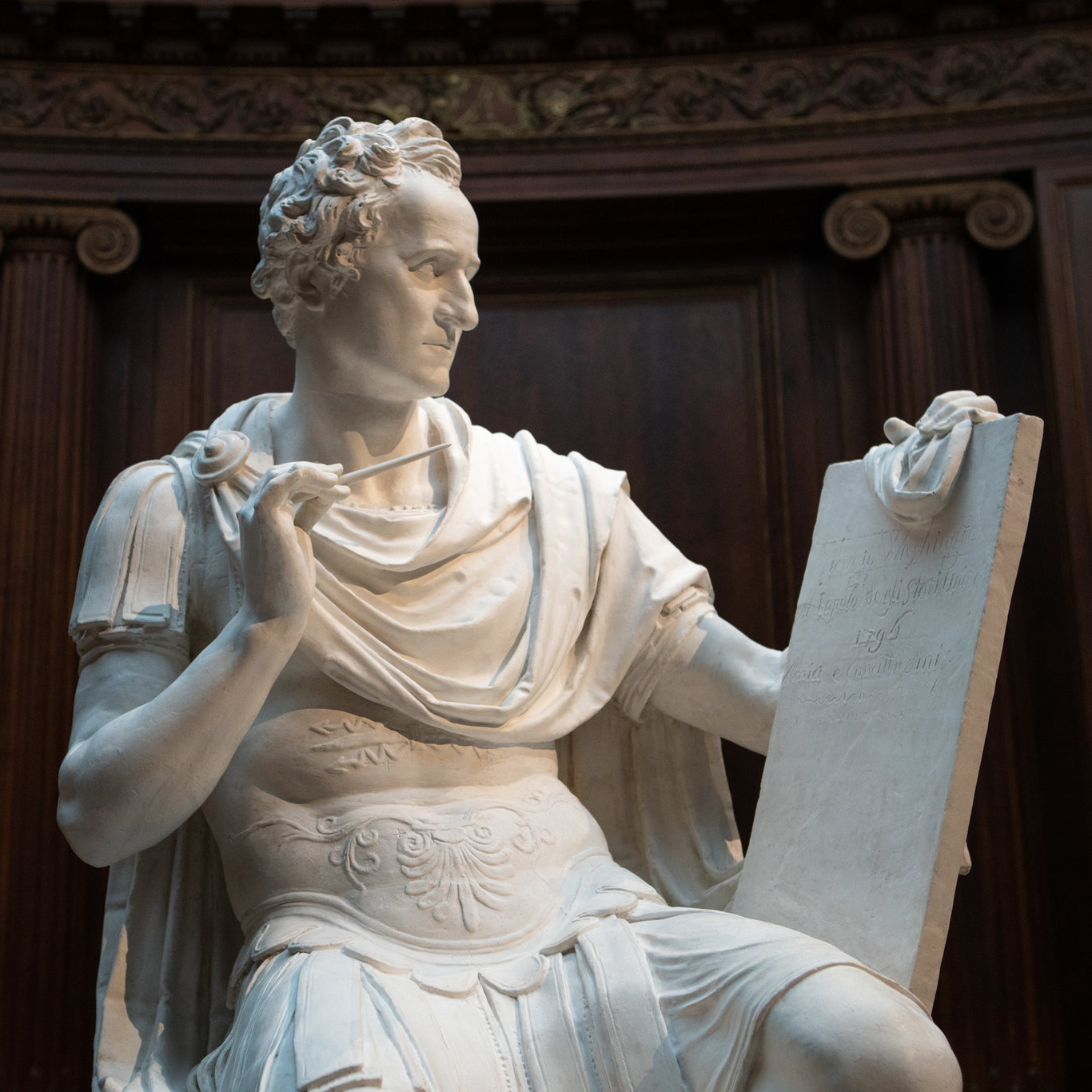
Antonio Canova designed the George Washington Memorial following the recommendation of Thomas Jefferson. The Carrara marble model of Washington, depicted in ancient Roman military armor, was crafted in 1821 but was destroyed in 1831. The existing replica was produced in 1970 by Romano Vio.
Gaetano Trentanove was born in Florence, Italy in 1858, and studied art in the city in his youth. His early success found him visiting the United States, and eventually moving there, in the late 19th century where he obtained contracts to work on several projects in his workshop in Florence. He would become an American citizen eventually, but did return to Florence after retiring and died there in 1937.
Gaetano Russo, who was born in 1847 in Messina, Italy, studied art and sculpture in Rome at the Accademia Reale dei Belli Arti under Girolamo Masini and later continued his studies under Giulio Monteverde. Most of his existing work is located in Messiana, but he did work with sculpture and architecture on a global scale. It is believed he died in a major earthquake in 1908.
Furio Piccirilli, born in Massa, Italy in 1868, is considered the most creative of the Piccirilli brothers. Furio is one of the two brothers we know studied sculpture in Rome. Furio helped his brothers and did his own solo work in New York and Washington D.C. He retired back in Italy, where he passed away in 1949
Francisco Iardella, born in Carrara, Italy in 1793, emigrated to the United States with his cousin Carlo Franzoni in 1816 to help rebuild the recently destroyed Capitol in Washington D.C. Throughout his career, he worked closely with Benjamin Henry Latrobe and Giovanni Andrei. He was later asked to oversee the sculpture work of the Capitol. He passed away suddenly in 1831 (Though some sources have it listed as 1832).
Francesco Lazzarini was born in Carrara, Italy in 1748. He studied in Rome at a young age and is regarded as a talented sculptor. Not much is known of Lazzarini's life and death in 1808, but the art he created was found in many incredible collections, including Peter I of Russia's.
Five Symbolic Figures was a set of five statues created by Leo Lentelli for San Francisco's Main Library in 1918. The concrete statues, representing Art, Literature, Philosophy, Science, and Law, were removed in 1996 when the building was repurposed. The classical Roman reliefs have since changed private hands several times.
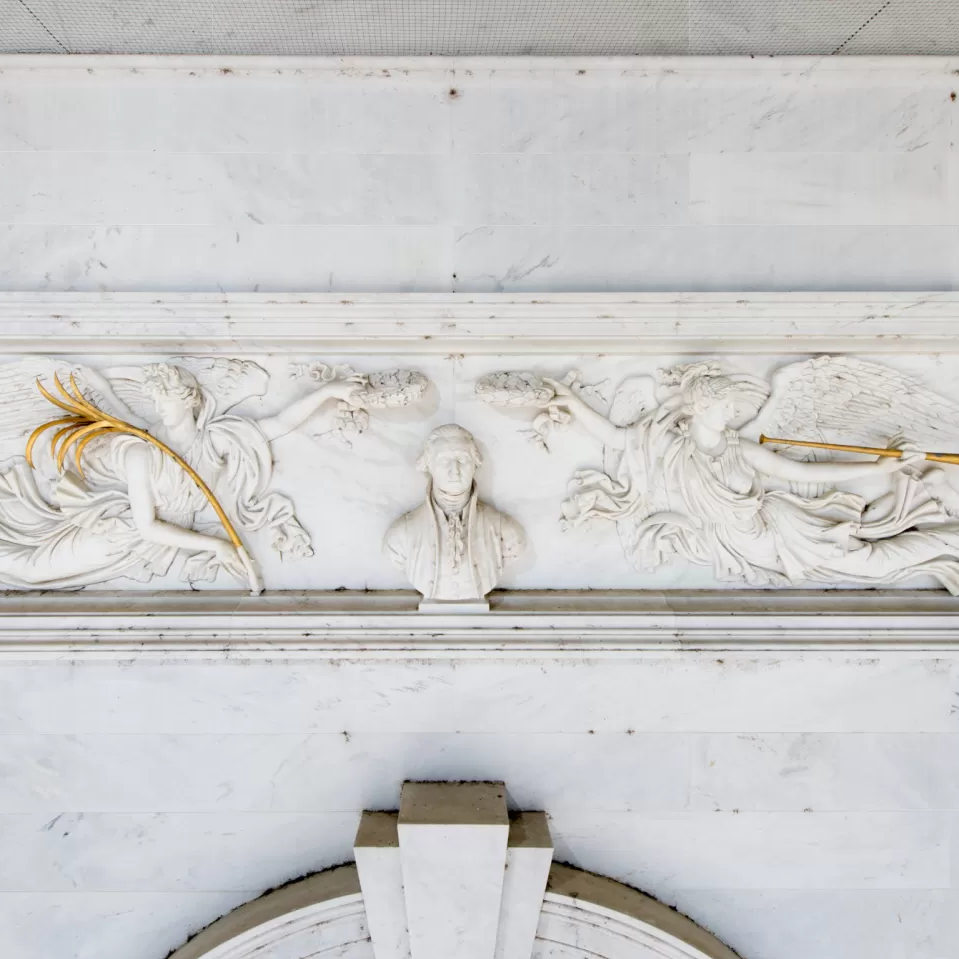
Fame & Peace Crowning George Washington is a bas-relief created by Antonio Capellano in 1827 for the U.S. Capitol. The original sandstone figure depicts two angels, Fame and Peace, placing laurel crowns on a bust of George Washington. The original was removed for preservation and replaced by a marble copy in 1960.
Enrico Causici was born in Verona, Italy in 1790. He may have studied under Antonio Canova in Rome. Enrico was contracted to help in the construction of the United States Capitol in the early 19th century. Enrico claims to have made the first bronze bust in the U.S., but his claim is not provable. He moved to Havana, Cuba some time in the 1830s where he died of Cholera in 1835.
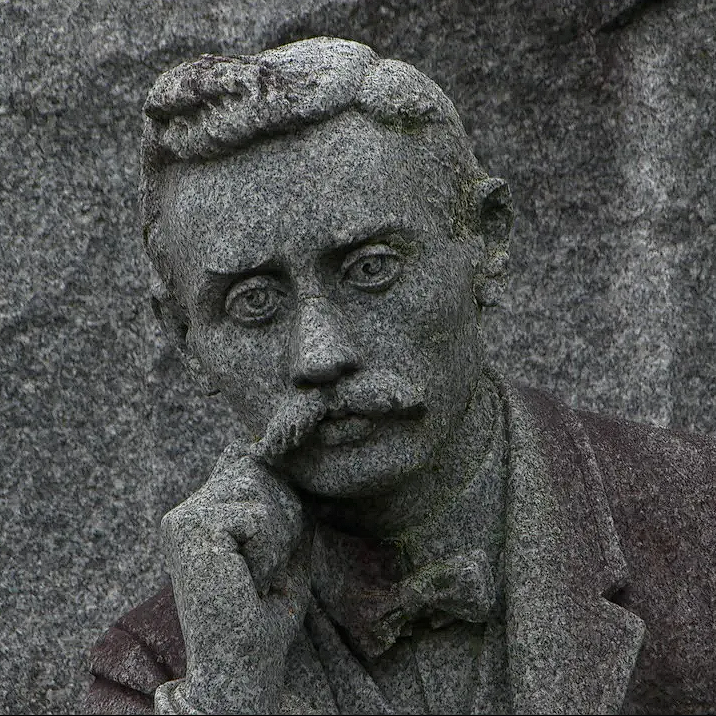
Elia Corti, born in Viggiù, Italy in 1869, immigrated to the United States in 1892. He worked as a carver in Barre, Vermont, with his business partner, Sam Novelli. Corti was a dedicated socialist who advocated for workers' rights. In attendance of a political meeting, he was killed in 1903 during a fight among anarchists and socialists.
E. Luigi Persico was born in Naples, Italy in 1791 and later studied at the local Accademia di Belle Arti. He moved to America in his youth to start his career in Baltimore in 1815. He helped to define the monument landscape of the United States Capitol later in his career. He would retire to his birth city of Naples, where he died in 1860.
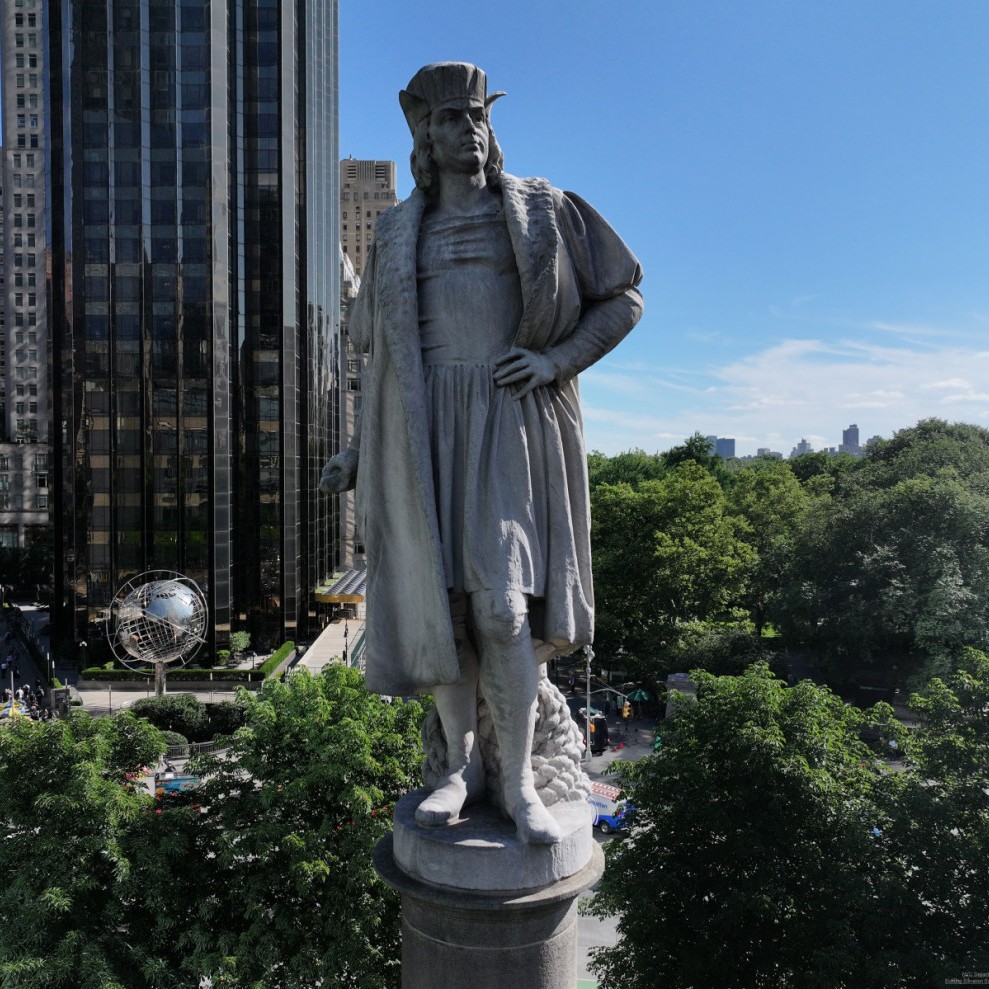
Gaetano Russo's Christopher Columbus Monument in New York City serves as the focal point of Columbus Circle. The monument features a Carrara marble statue of Columbus atop a granite base and pedestal. Unveiled in 1892, the city had the monument erected to commemorate the 400th anniversary of Columbus's expedition.