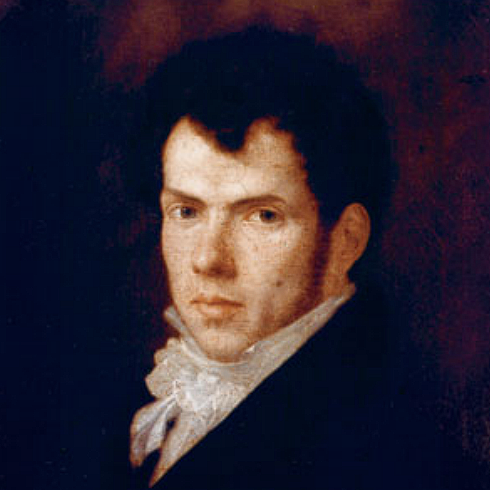
Carrara, Italy native Carlo Nicoli was born in 1843. After studying art in the city he relocated to Florence to work under Giovanni Duprè. After years of success in Florence, Nicoli opened a workshop in Carrara in 1876 and would pass away there in 1915.
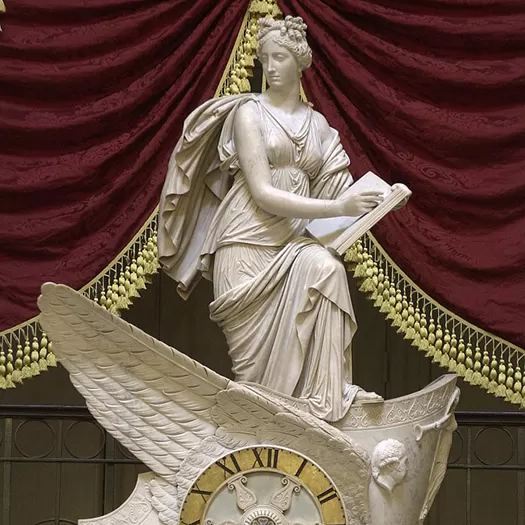
Born in 1789 in Carrara, Italy, Carlo Franzoni studied at the art academy in his birth city. After his brother, Giuseppe Franzoni, died in 1815, Carlo moved to the United States in 1816 to continue Giuseppe's work on the Capitol. Unfortunately, Carlo also passed away unexpectedly in 1819 from heart complications.
In 1819, Carlo Franzoni shipped the Car of History Clock in multiple segments crafted from Carrara marble to the Hall of Representatives. The statue of Clio, depicted observing the passage of time, is positioned in the National Statuary Hall alongside images of George Washington and Victory on her chariot.
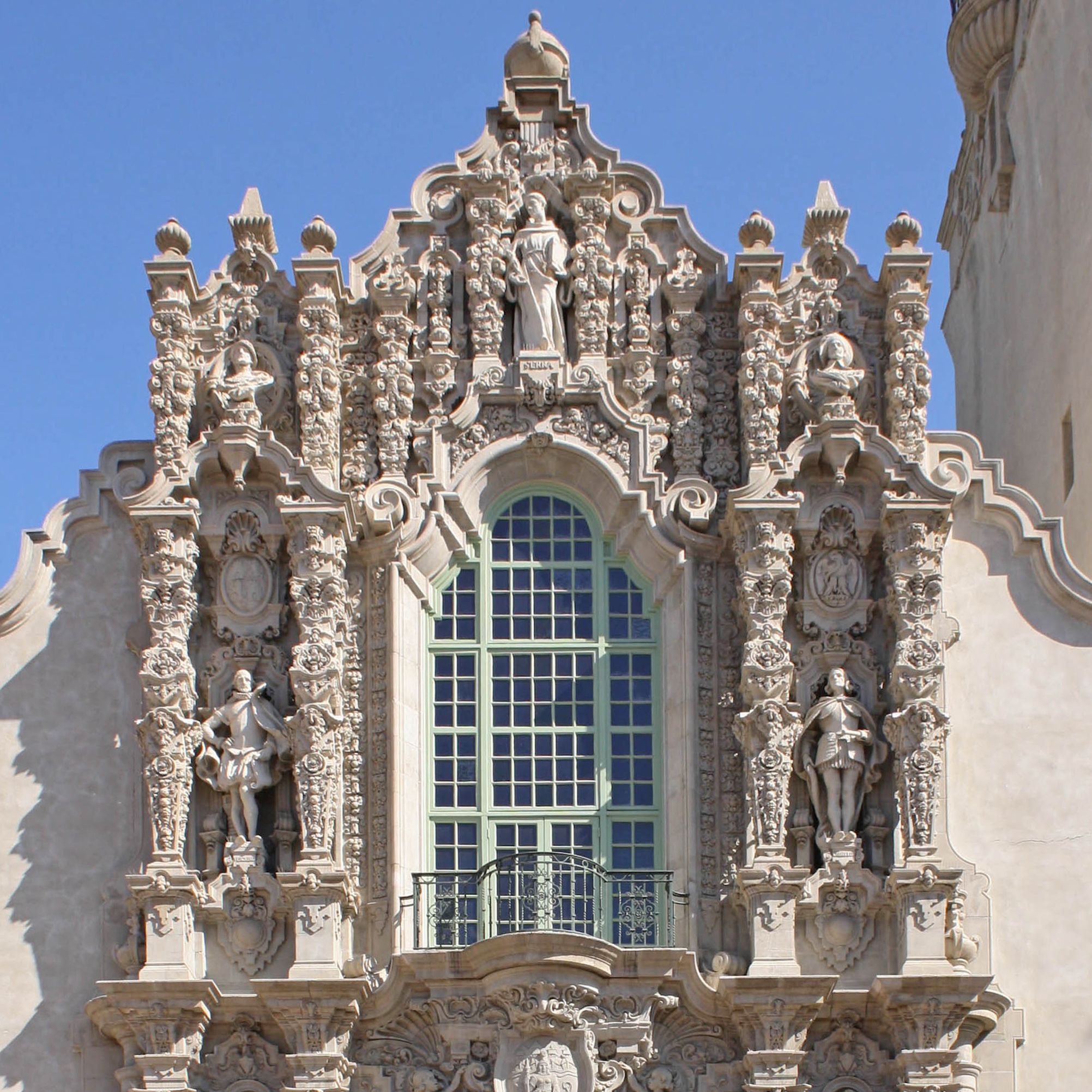
The frontispiece of the California Building, now the San Diego Museum of Us, was built in 1915 for the Panama-California Exposition. The Piccirilli brothers and Bertram Goodhue developed molds for concrete. The design, inspired by Spanish and Mexican church architecture, has been a San Diego symbol for over a century.
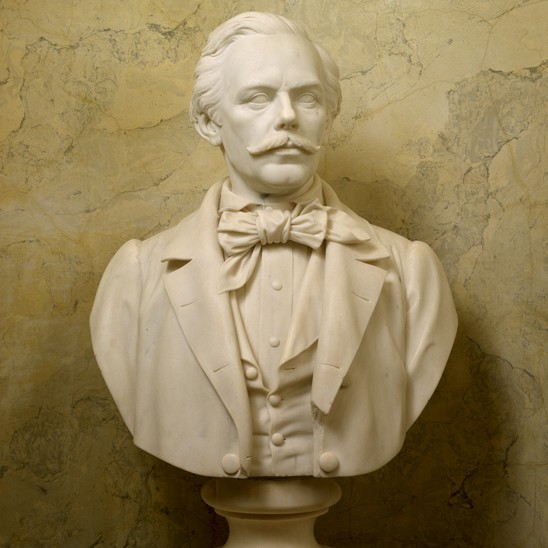
Tommaso Gagliardi was contracted to create a marble bust of his mentor, Thomas Crawford, in 1871. The bust was commissioned for the Senate wing of the United States Capitol, acknowledging Crawford's contributions as a sculptor for that Capitol.
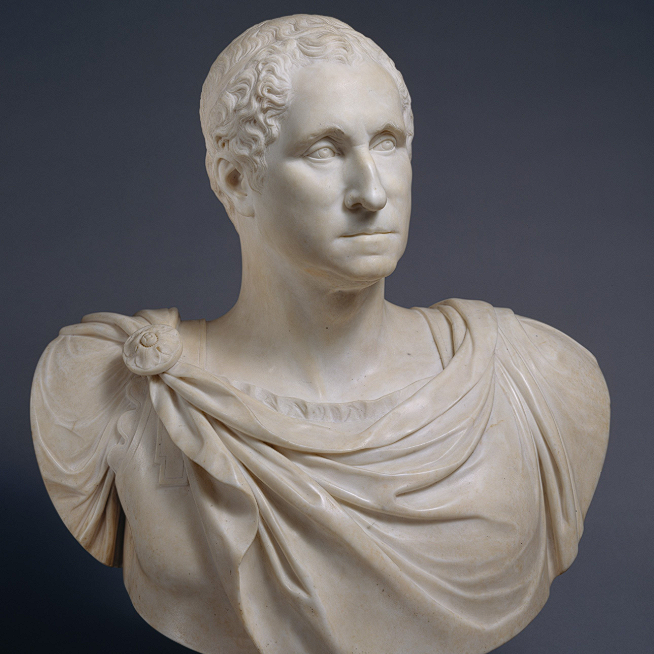
Giuseppe Céracchi's bust of George Washington was crafted over 1791-1795 as the two sat together. The bust portrays Washington as a Roman military hero and this likeness served as a reference for Antonio Canova in the creation of his monument to the President. The Metropolitan Museum of Art acquired the bust in 1914, where it remains housed.
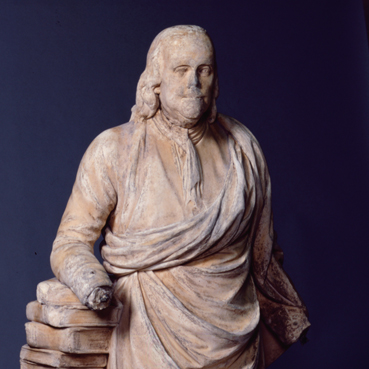
Carved from Carrara marble, Francesco Lazzarini's 1792 statue of Benjamin Franklin depicts him in a Roman toga, holding symbols opposing monarchy. The original statue was relocated due to deterioration from its original position atop the Library Company of Philadelphia to its interior in 1880 and again in 1940.
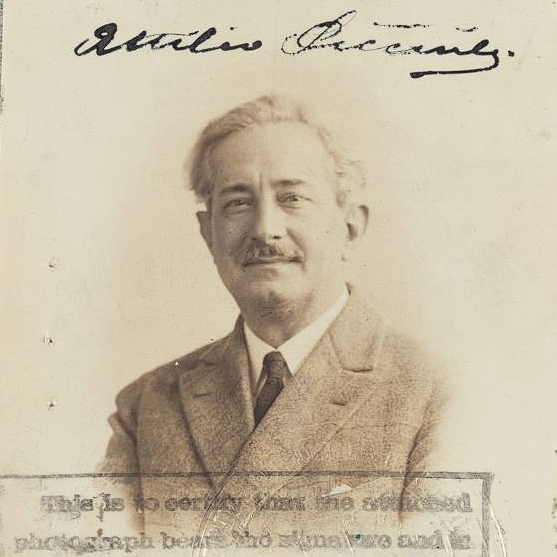
Atillio Piccirilli was born, just like all of his brothers, in Massa, Italy in 1866. Attilio is the most well-known brother, and one of two brothers we know traveled to Rome to study sculpture. Attilio is credited with more individual work than the other brothers and did more projects outside of New York and Washington D.C. before his death in 1945.
Antonio Capellano was born in 1780 in Italy. He studied in Rome under Antonio Canova and is credited as a sculptor of the court of Spain. He was invited by B. Henry Latrobe to help decorate the buildings and landscape of Washington D.C. after its destruction in 1814. He retuned to Italy and opened a workshop in Florence where he died in 1840.
Antonio Canova was born in Possagno, Italy in 1757 and apprenticed to Giuseppe Bernardi in Venice. He moved to Rome in 1780 to study and work, becoming renowned as a sculptor and one of Europe's most acclaimed. His major work, the Tempio Canoviano, was completed in 1822 after his death, with his body interred inside.