Monuments and Statues by Italian Artists

Monuments and statues constructed from stone are intended to serve as enduring symbols of architects’ visions. During the development of the American architectural landscape, stone monuments were erected as emblems of memory and heritage, as well as a means of relating to the voting public. Materials such as marble and granite, renowned for their durability and tradition, were deemed ideal for the image that the leaders of American public spaces sought to project. These monuments should be viewed not only as individual markers of wars, notable figures, and philosophies but also as components of a broader movement. Many of the monuments detailed below were established during the era recognized as Statue Mania, spanning from 1870 to 1920, a period marked by a proliferation of monument construction throughout Western countries. Commemorative structures in stone serve to reinforce collective narratives of struggles for liberty and identity, embedding these stories within the physical landscape of the United States. It is important to acknowledge, however, that some monuments erected by Italians were conceived with the intent of conveying the messages associated with the Confederate philosophy of the Lost Cause in the U.S. In the Southern United States, organizations such as the United Daughters of the Confederacy utilized these monuments as symbols of their version of history, which romanticized the antebellum South and regarded the Confederate soldier as a hero of personal liberty. These narratives neglect the abhorrent history of slavery in the U.S. Contemporary perspectives have increasingly regarded markers such as Confederate monuments and statues of Christopher Columbus as problematic, and their ongoing presence has ignited discussions regarding the removal of these statues from public spaces.

The New York Stock Exchange Pediment
The New York Stock Exchange Pediment was completed in 1908 by the Piccirilli Brothers, following the marble design crafted by John Quincy Adams Ward. The alternative title of the pediment, "Integrity Protecting the Works of Man," references the eleven figures depicted in the monument. In 1936, the original pediment was replaced with a metal replica for preservation purposes.
US Custom House
The Four Continents
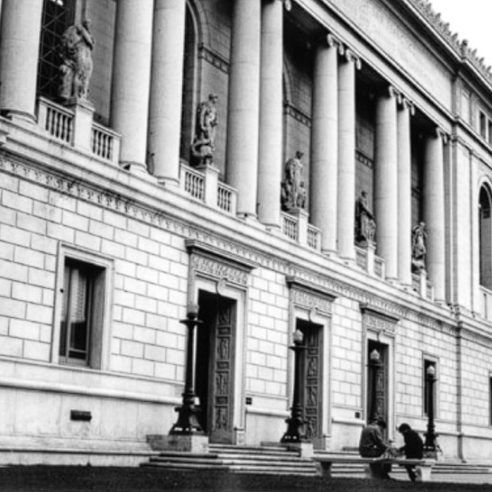
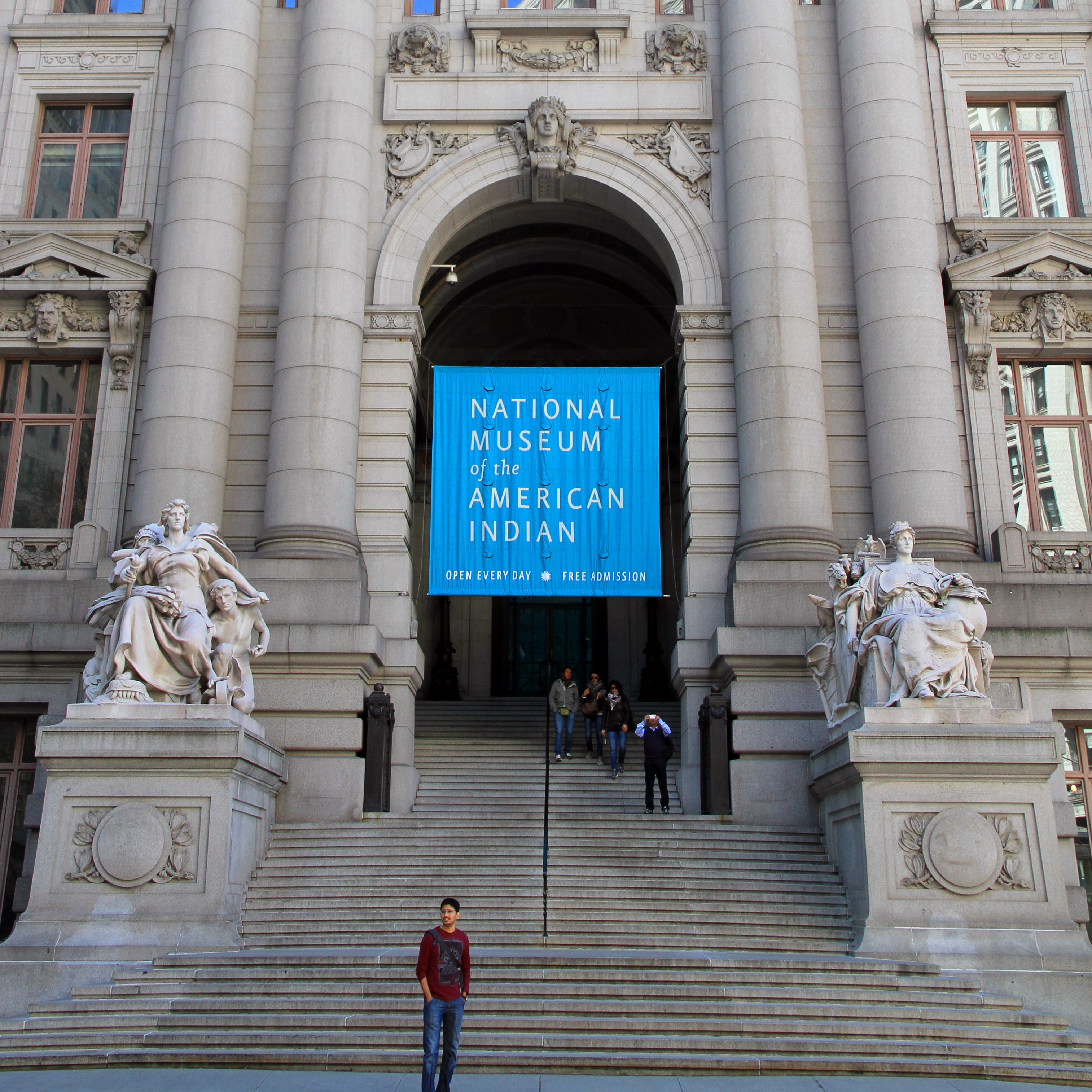
Four Tennessee marble sculptures representing the major continents of the world are positioned in front of the U.S. Custom House in New York City. The Piccirilli brothers executed the carving of the Four Continents, based on a design by Daniel Chester French, in 1907. America, Africa, Asia, and Europe continue to oversee the streets of New York over a century later.
California State Building Frontispiece
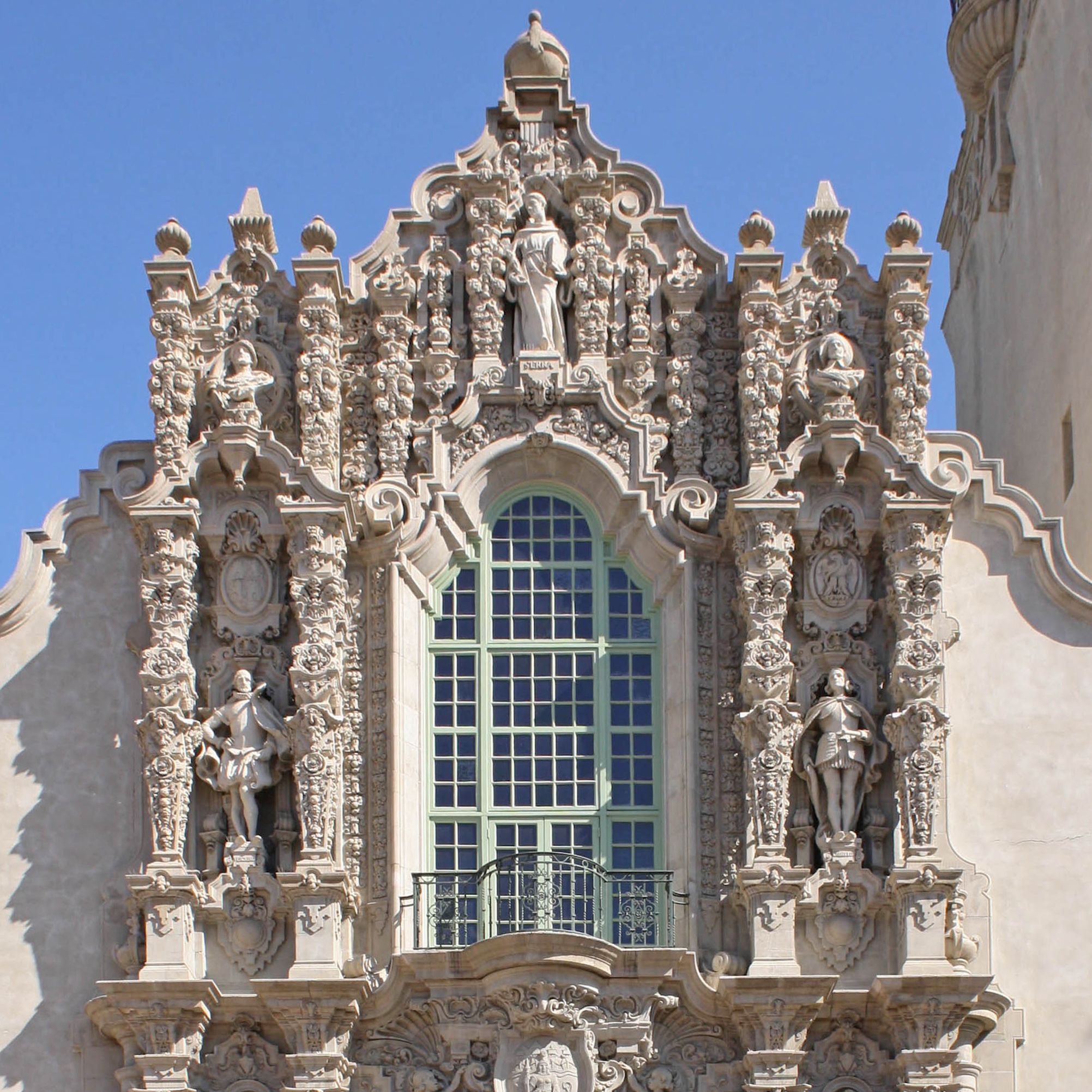
The frontispiece of the California Building, now the San Diego Museum of Us, was built in 1915 for the Panama-California Exposition. The Piccirilli brothers and Bertram Goodhue developed molds for concrete. The design, inspired by Spanish and Mexican church architecture, has been a San Diego symbol for over a century.
Lincoln Memorial
Lincoln Memorial
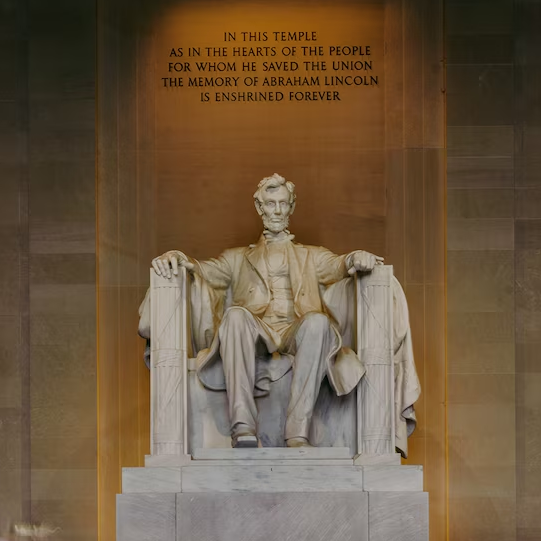
The Lincoln Memorial (1922), one of the most emblematic symbols of the United States, was designed by Daniel Chester French and executed with the carving expertise of the Piccirilli brothers. The 19-foot-tall Lincoln and his throne are crafted from marble sourced from Georgia and Tennessee, as he looks out at the National Mall.
USS Main National Monument
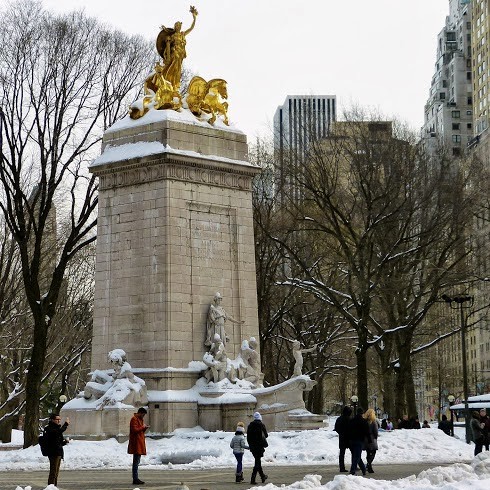
The memorial dedicated to the soldiers who were killed on the USS Maine is located in Columbus Circle, New York City. Carved in part by Attilio Piccirilli, the monument, made of marble, granite, and bronze, was unveiled in 1913. The monument additionally features figures honoring the mothers of soldiers, Justice, and the Atlantic and Pacific Oceans.
New York Public Library Lions
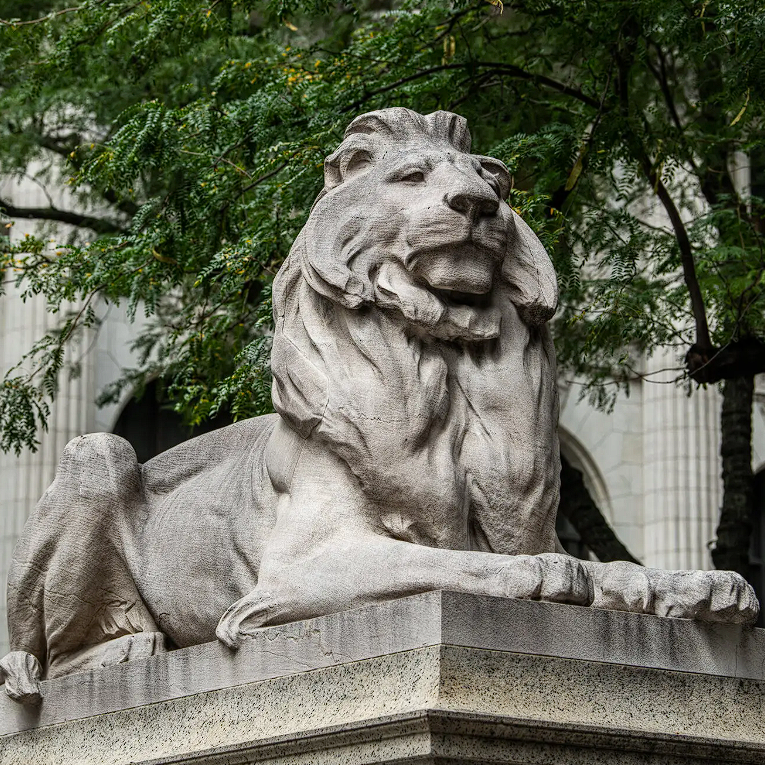
Carved by the Piccirilli Brothers from Tennessee marble in 1911, the Lions of the New York Public Library, known today as Patience and Fortitude, are positioned on either side of the entrance steps. They are often used as symbols of the library in its logo and materials.
Washington Monument
Washington Monument
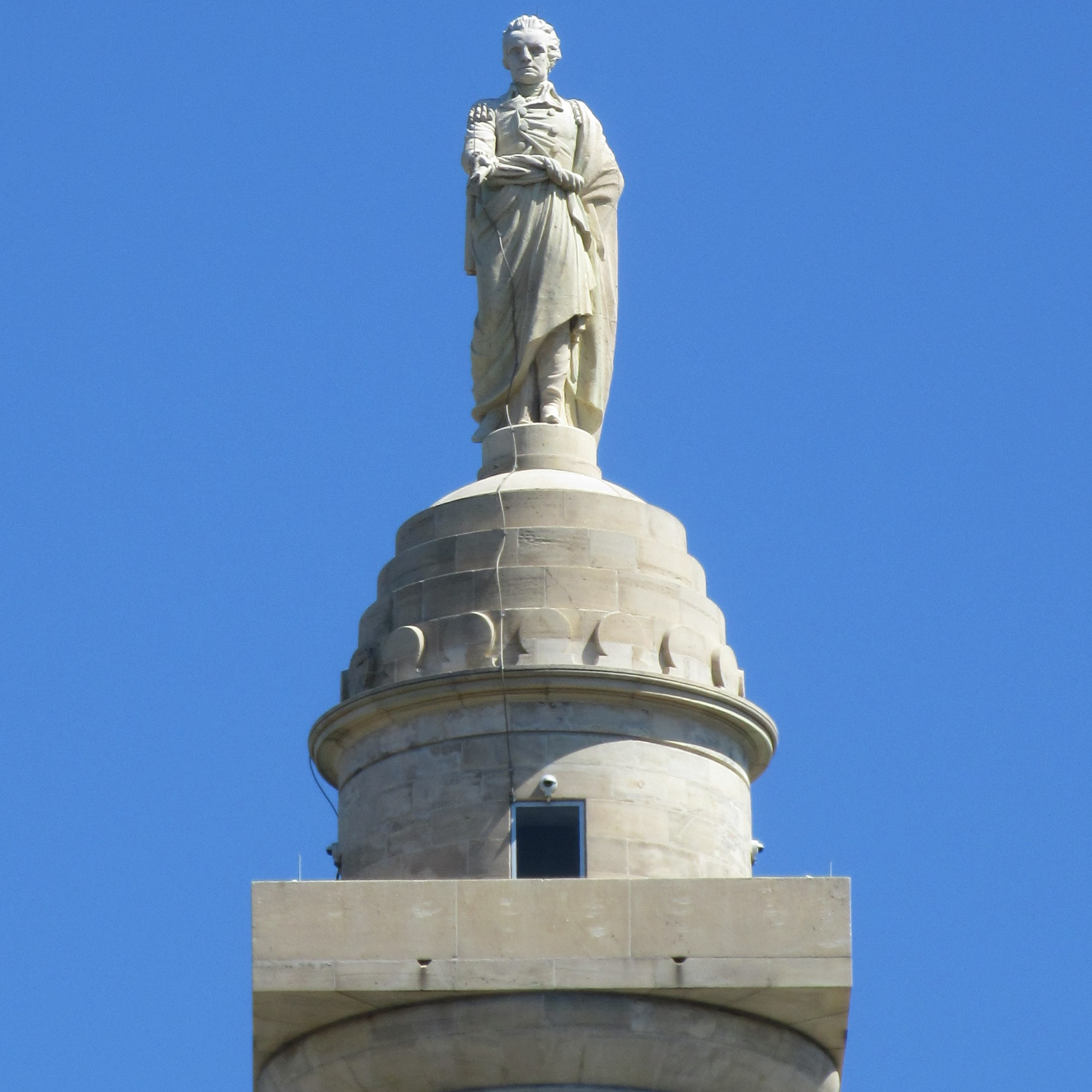
Baltimore, Maryland, houses Enrico Causici's 1829 statue of George Washington, which is situated atop the Washington Monument. The marble sculpture measures over 14 feet in height and depicts Washington dressed in a Roman toga.
Bust of George Washington
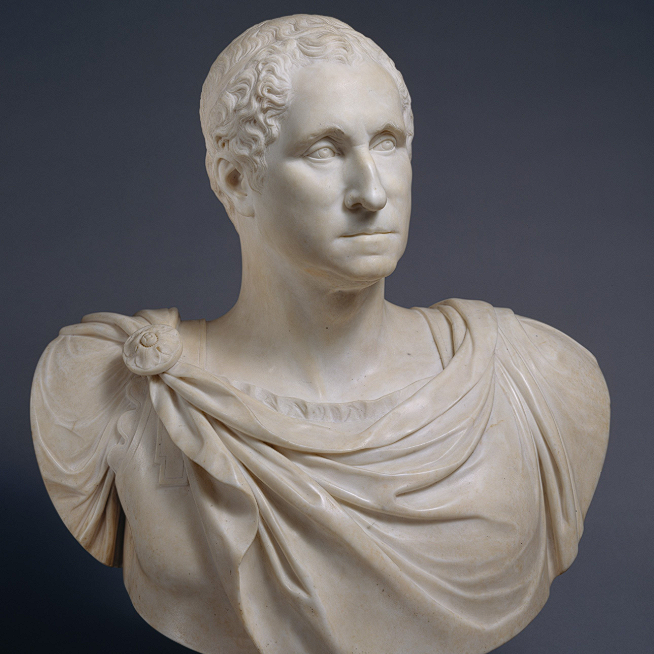
Giuseppe Céracchi's bust of George Washington was crafted over 1791-1795 as the two sat together. The bust portrays Washington as a Roman military hero and this likeness served as a reference for Antonio Canova in the creation of his monument to the President. The Metropolitan Museum of Art acquired the bust in 1914, where it remains housed.
Tripoli Monument
Tripoli Monument
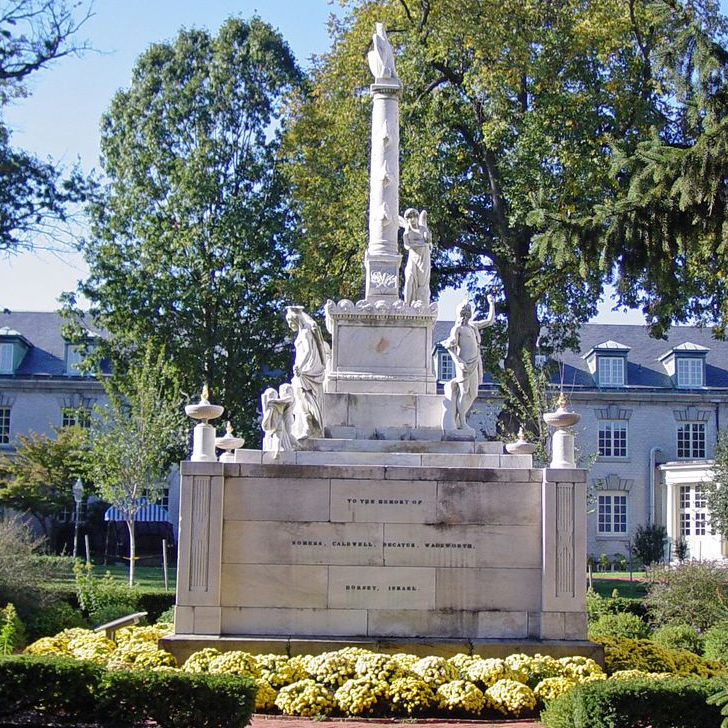
Giovanni Carlo Micali's 1807 monument, made of Carrara marble and sandstone, was among the U.S.'s earliest military monuments. It features a rostral column and four statues symbolizing America, History, Commerce, and Victory, honoring officers who died in the First Barbary War in Tripoli. It was moved to the U.S. Naval Academy in 1860.
Tobacco Column Capitals
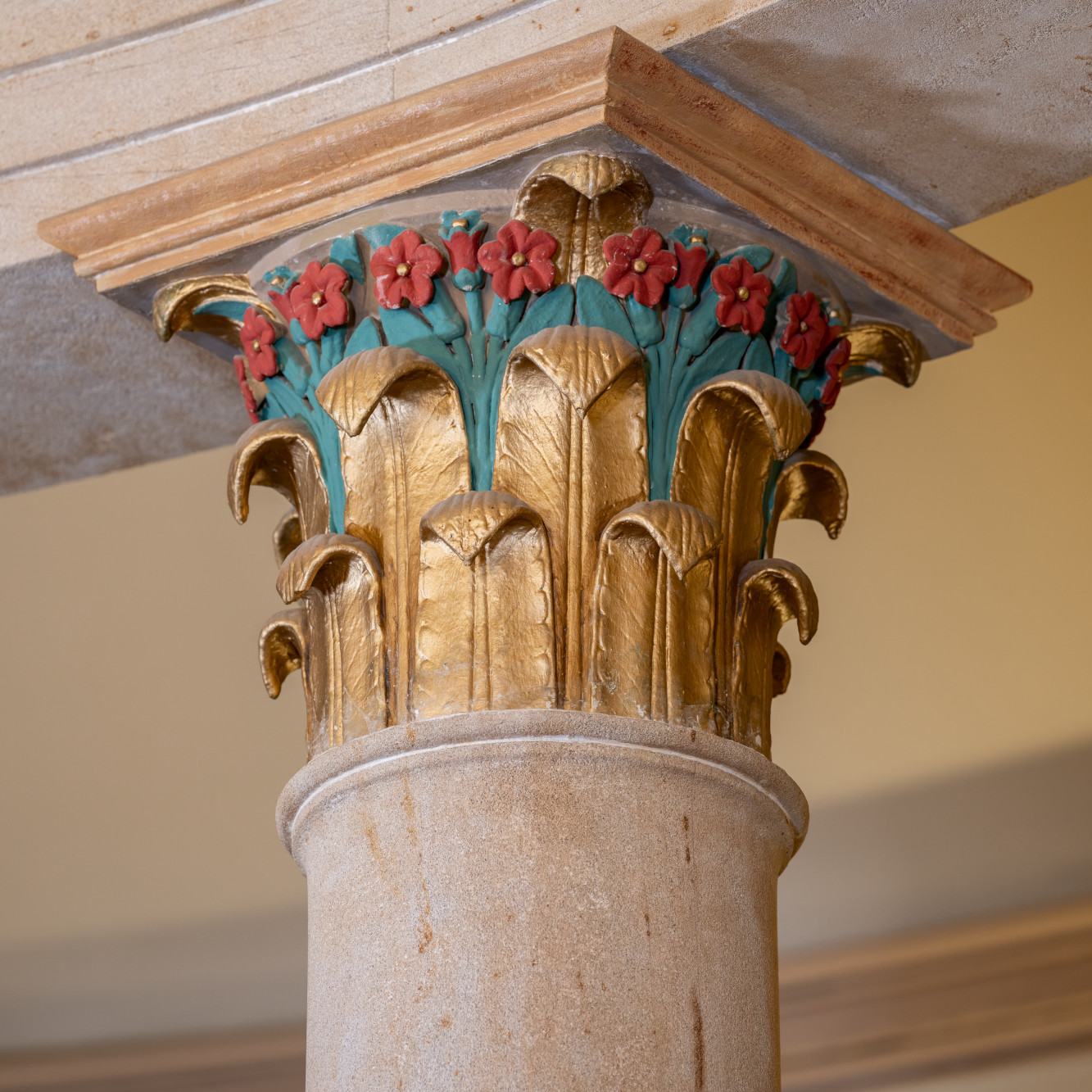
The 16 tobacco capitals within the Small Senate Rotunda of the U.S. Capitol were crafted from sandstone by Francisco Iardella in 1817. These capitals feature gilded tobacco leaves and are decorated with painted red flowers. The design was overseen by Benjamin Henry Latrobe.
Five Symbolic Figures
Five Symbolic Figures was a set of five statues created by Leo Lentelli for San Francisco's Main Library in 1918. The concrete statues, representing Art, Literature, Philosophy, Science, and Law, were removed in 1996 when the building was repurposed. The classical Roman reliefs have since changed private hands several times.
Victory
Juno and Victory
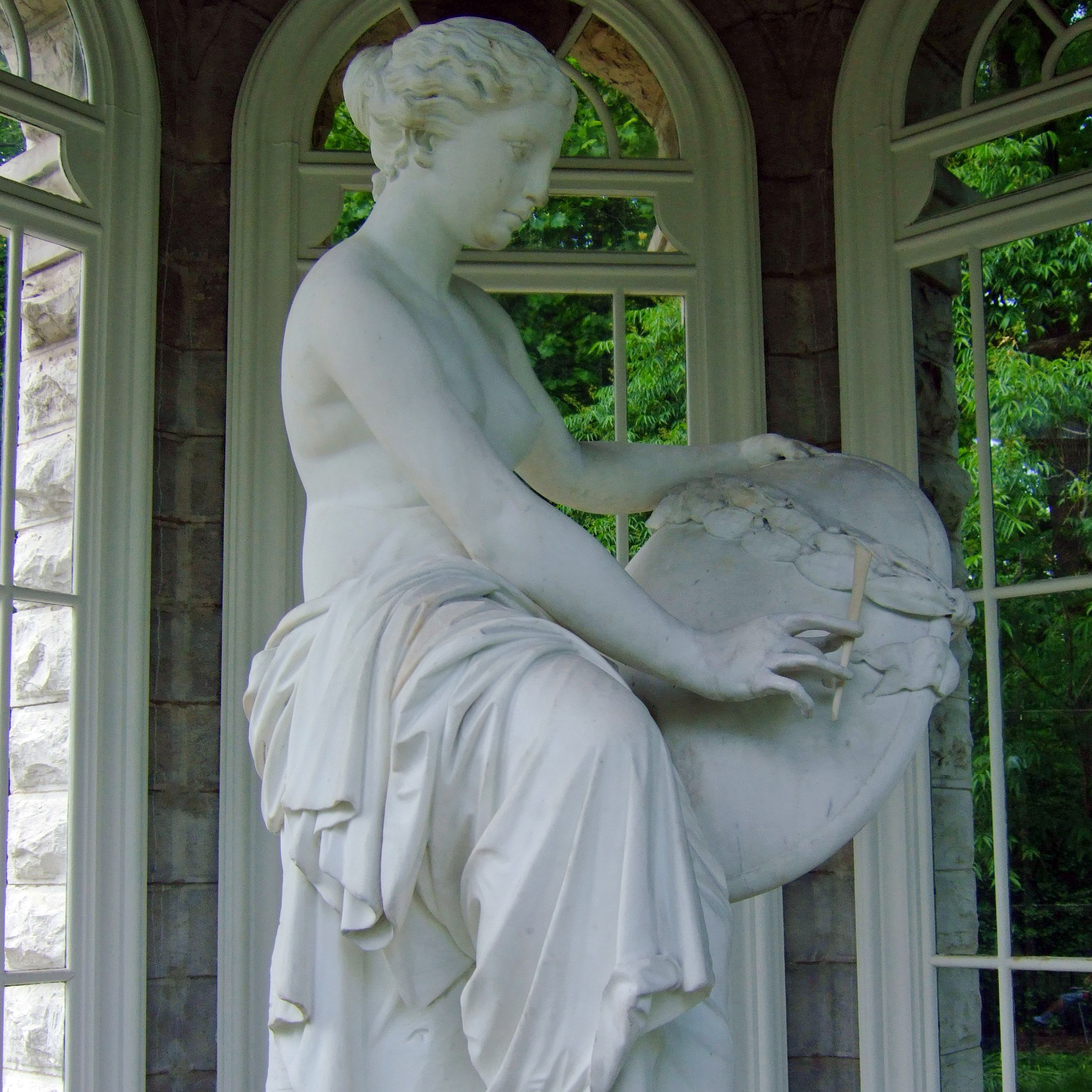
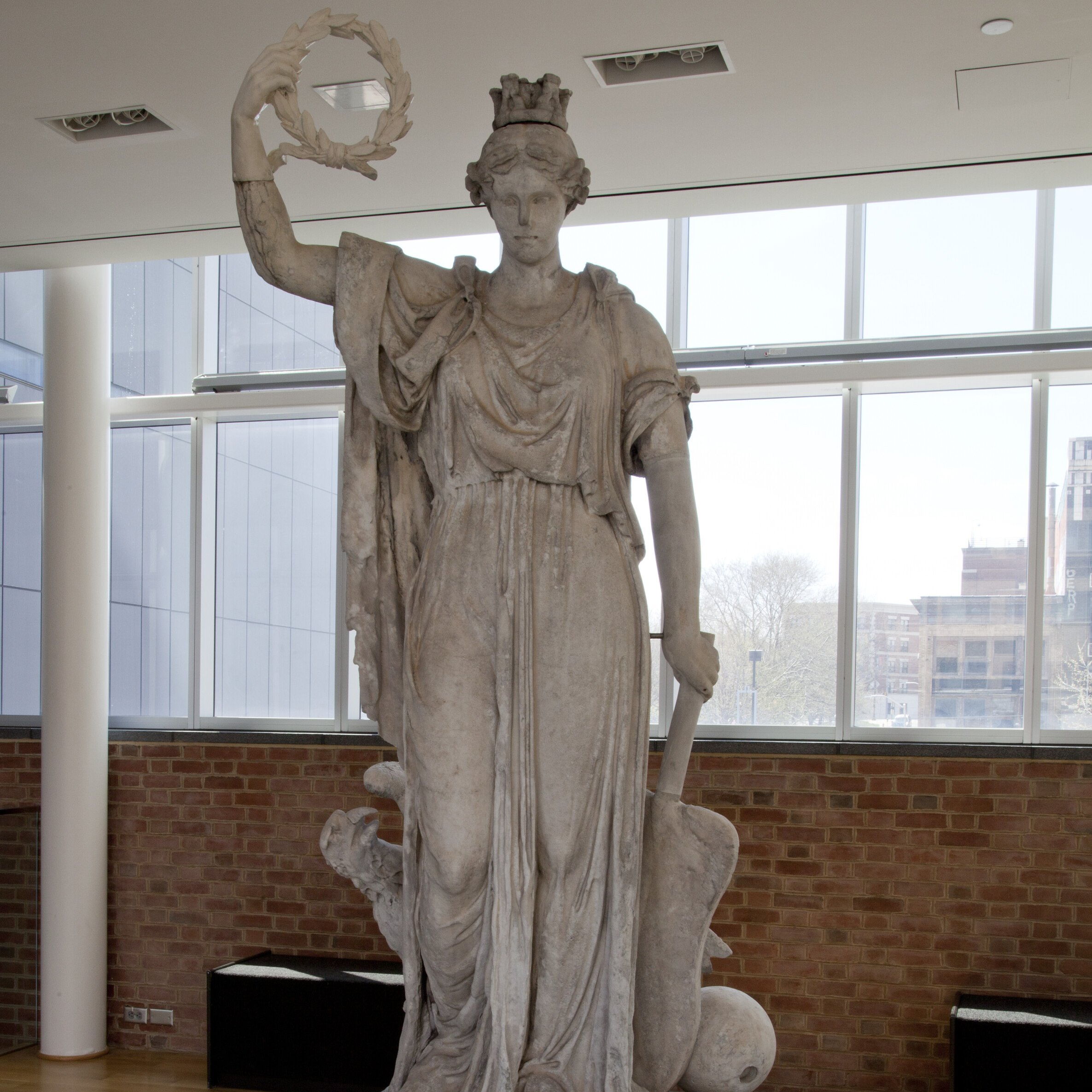
The statues of Juno and Victory at the Missouri Botanical Garden were carved from Carrara marble by Carlo Nicoli in 1886. Juno is depicted as a classical Roman woman in robes, while Victory is a replica of Cincenzo Consani's Victory located in Florence. Henry Shaw had the statues moved to St. Louis, and following his passing, Juno was repositioned nearer to his former residence.
Car of History Clock
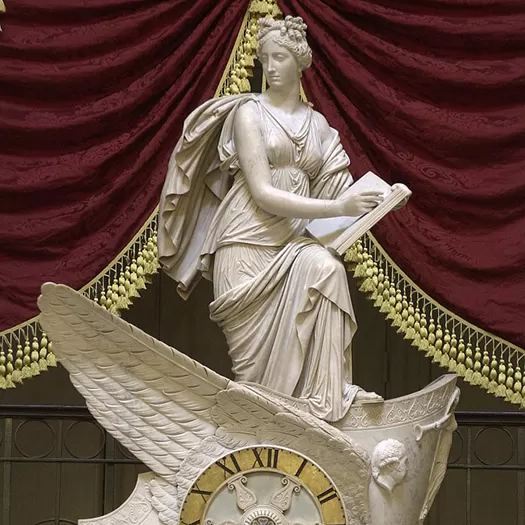
In 1819, Carlo Franzoni shipped the Car of History Clock in multiple segments crafted from Carrara marble to the Hall of Representatives. The statue of Clio, depicted observing the passage of time, is positioned in the National Statuary Hall alongside images of George Washington and Victory on her chariot.
The Capitals in the National Statuary Hall
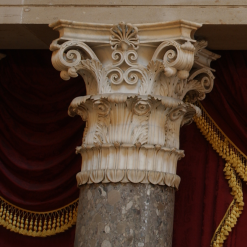
Giovanni Andrei crafted the Capitol's Hall of Representatives capitals twice. After the originals were destroyed in 1814 during the British Burning of Washington, new Corinthian-style capitals were carved from Carrara marble and installed in 1819. They were inspired by the Choragic Monument of Lysicrates in Athens.
Statue of Liberty Original Drawing
Liberty Statue
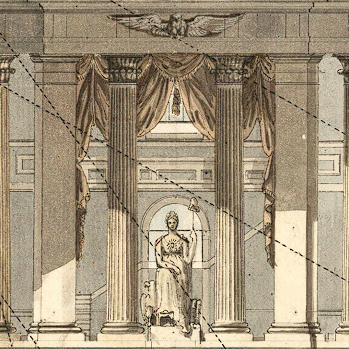
Giuseppe Franzoni was meant to carve his Liberty Statue from Vermont marble for the Hall of Representatives following 1814; however, he died in 1815. His plaster model was destroyed mere months after its completion in 1814 during the British Burning of Washington. The sculpture was intended to depict Lady Liberty alongside symbols of America.
Benjamin Franklin Statue
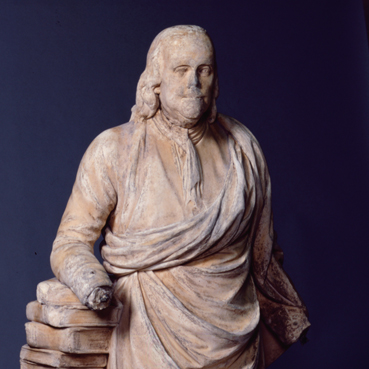
Carved from Carrara marble, Francesco Lazzarini's 1792 statue of Benjamin Franklin depicts him in a Roman toga, holding symbols opposing monarchy. The original statue was relocated due to deterioration from its original position atop the Library Company of Philadelphia to its interior in 1880 and again in 1940.
Rockingham War Memorial
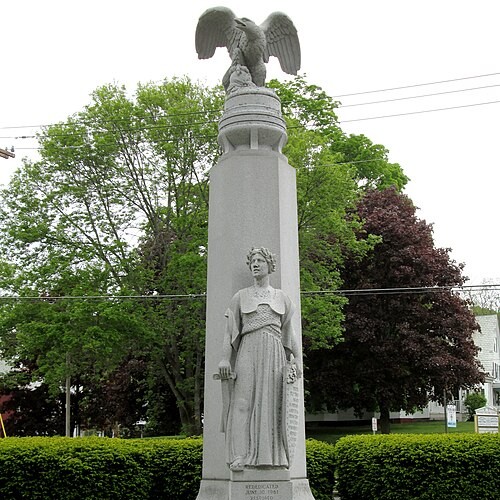
James S. Novelli carved the Rockingham War Memorial for the Bellow Falls, Vermont community in 1927. The granite statues and pillar are intended to honor American soldiers from all wars. The monument was relocated half a mile to its current site in 1961.
Robert Burns Monument
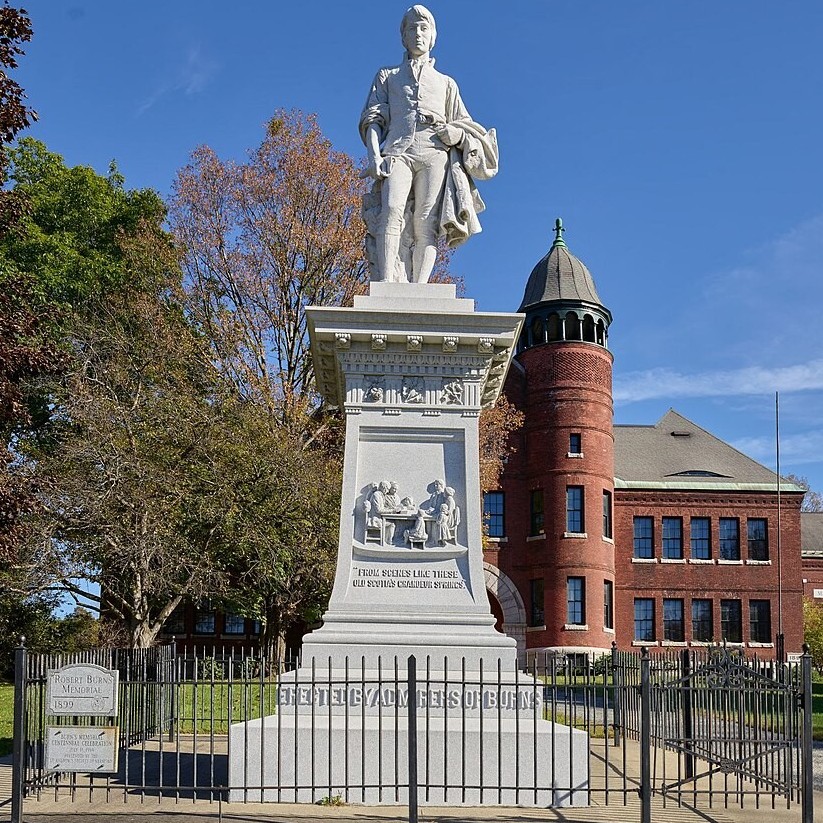
The Robert Burns Monument, sculpted by Sam Novelli and Elia Corti from Barre Granite in 1899, is situated in front of the Vermont History Center in Barre, Vermont. The statue of Burns, carved by Novelli, depicts the Scottish poet in the attire of a humble farmer. The panels, carved by Corti, illustrate scenes from Burns's poetry.
The Battle of Nashville Monument
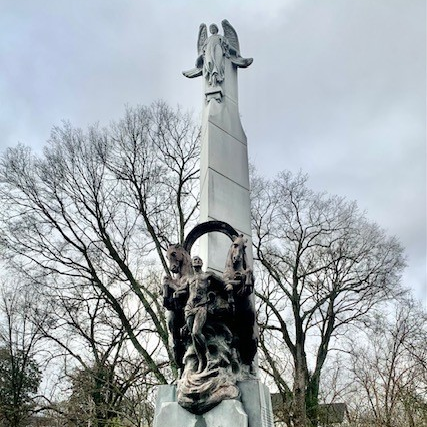
The marble obelisk of the Battle of Nashville Monument is topped with an Angel of Peace. Created by Giuseppe Moretti and unveiled in 1927, it honors Americans in the Civil War and World War I. The monument was moved twice, in 1974 and 1999, from its original Civil War artillery site.
Bust of Thomas Crawford
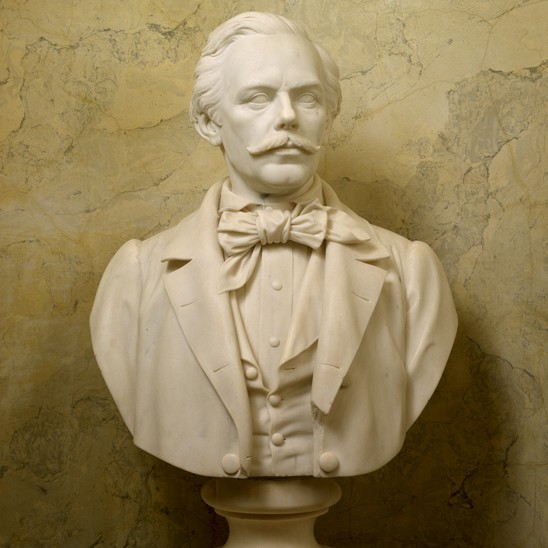
Tommaso Gagliardi was contracted to create a marble bust of his mentor, Thomas Crawford, in 1871. The bust was commissioned for the Senate wing of the United States Capitol, acknowledging Crawford's contributions as a sculptor for that Capitol.
Monument to Jaques Marquette
Monument to Jacques Marquette
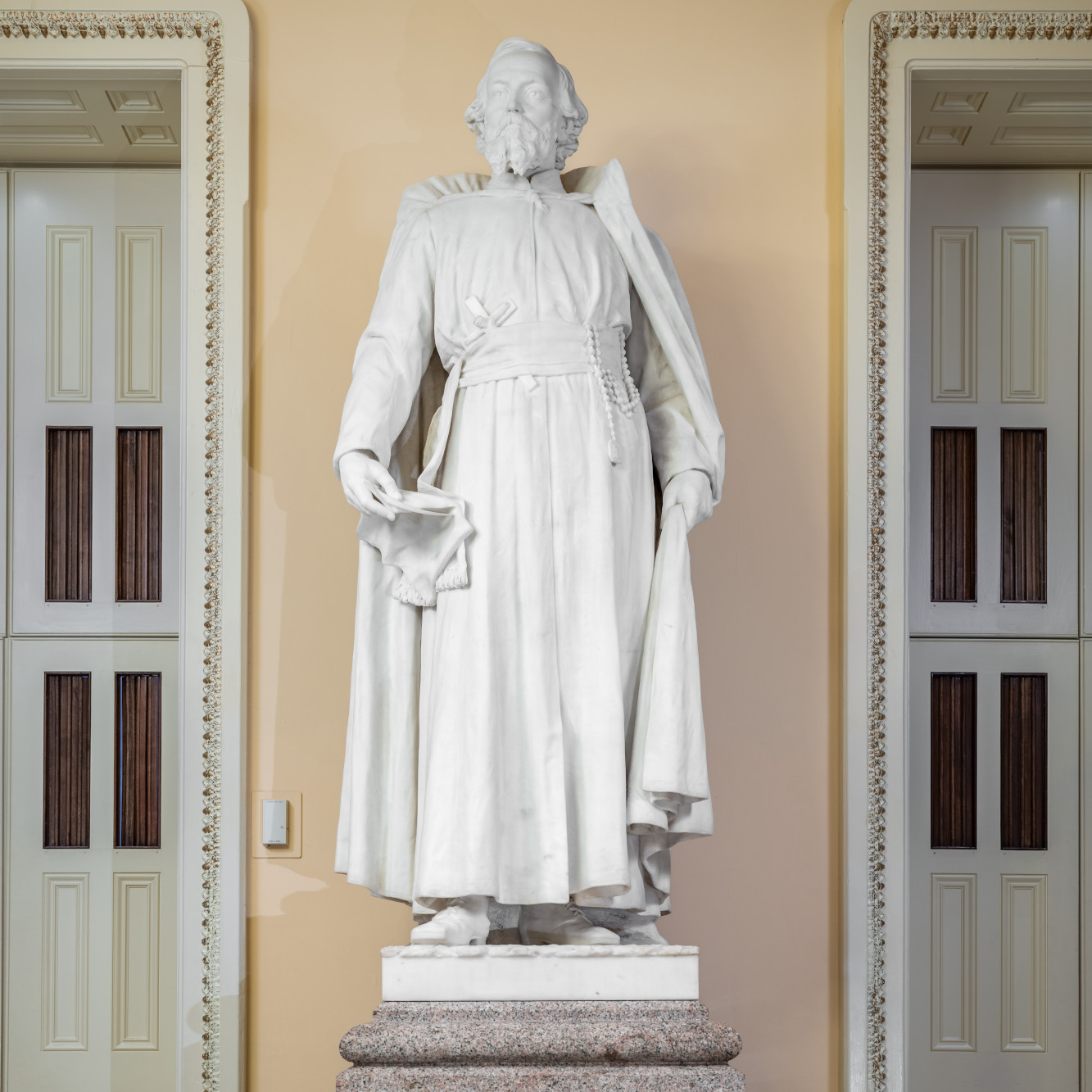
Gaetano Trentanove's Monument to Jacques Marquette was crafted from marble and officially unveiled in the United States Capitol in 1896. Marquette is depicted wearing a robe and has a rosary along with a crucifix tucked into his belt. This monument was a contribution from the state of Wisconsin.
Mount Rushmore
Mount Rushmore
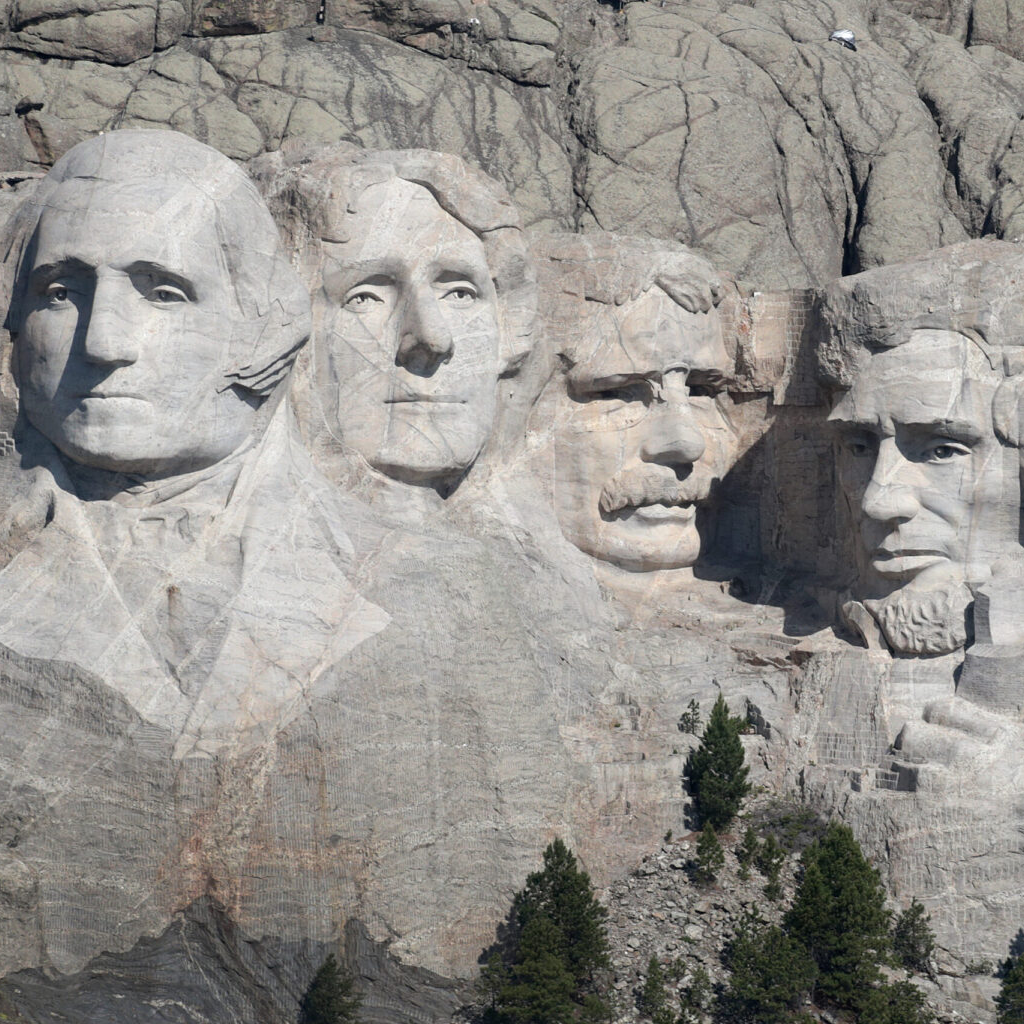
Mount Rushmore is a prominent U.S. monument carved from Six Grandfathers Mountain. Gutzon Borglum was the chief sculptor, assisted by Luigi Del Bianco. It features four presidents: Washington, Jefferson, Theodore Roosevelt, and Lincoln. Carving began in 1927 in Keystone, South Dakota, and ceased in 1941.
Fame & Peace Crowning George Washington
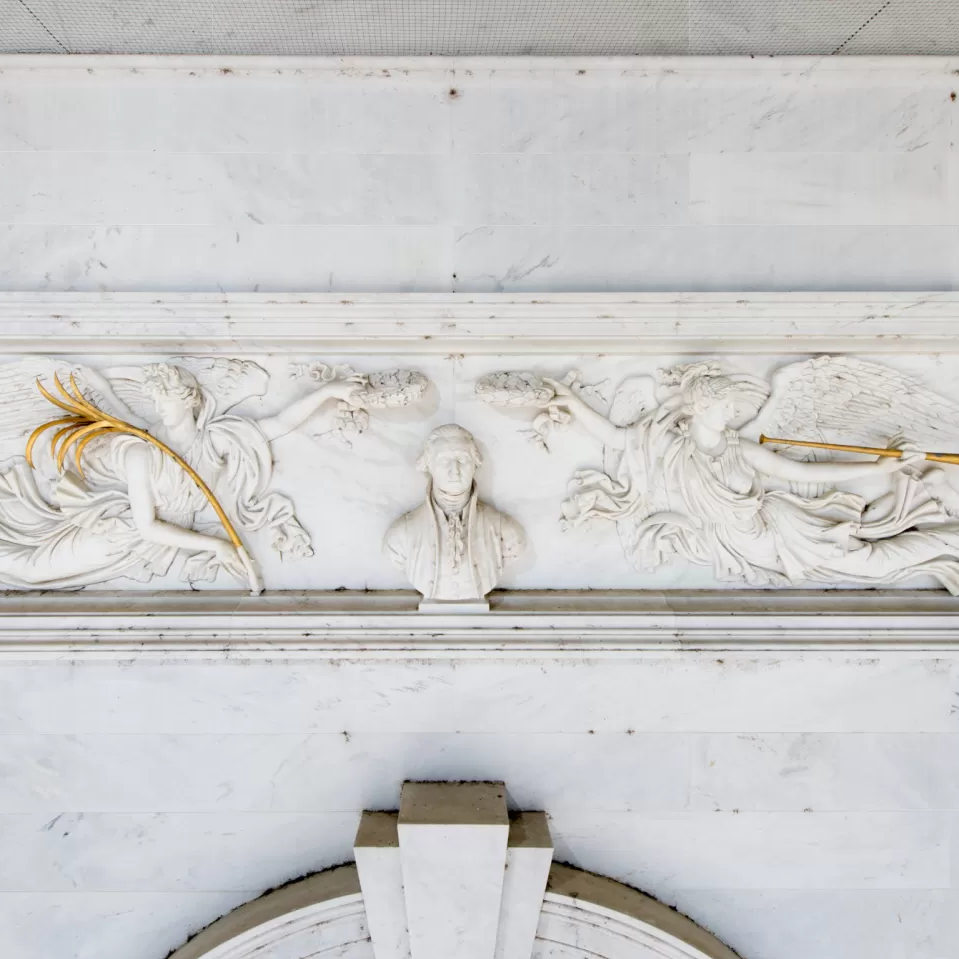
Fame & Peace Crowning George Washington is a bas-relief created by Antonio Capellano in 1827 for the U.S. Capitol. The original sandstone figure depicts two angels, Fame and Peace, placing laurel crowns on a bust of George Washington. The original was removed for preservation and replaced by a marble copy in 1960.
Lady Baltimore, Battle Monument
Antonio Capellano carved parts of the Baltimore Battle Monument in 1822, including a Carrara marble statue of a Roman matron called "Lady Baltimore." The original statue was replaced in 2013 and moved to the Maryland Historical Society, where it remains on display.
The Discovery of America
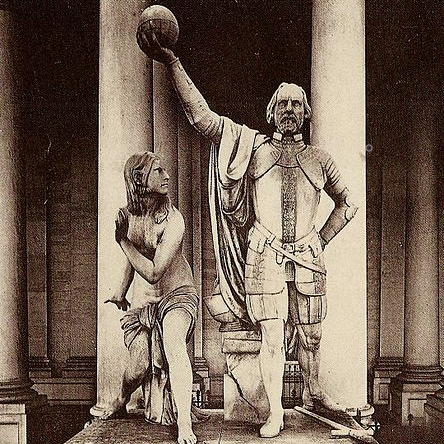
The Discovery of America, located at the U.S. Capitol, was a sculpture by E. Luigi Persico (1844) depicting Columbus with a globe and a nude Native American woman. Dismantled for restoration in 1958, it was ultimately permanently removed due to the efforts of the American Indian Advocacy group.
War and Peace
War and Peace
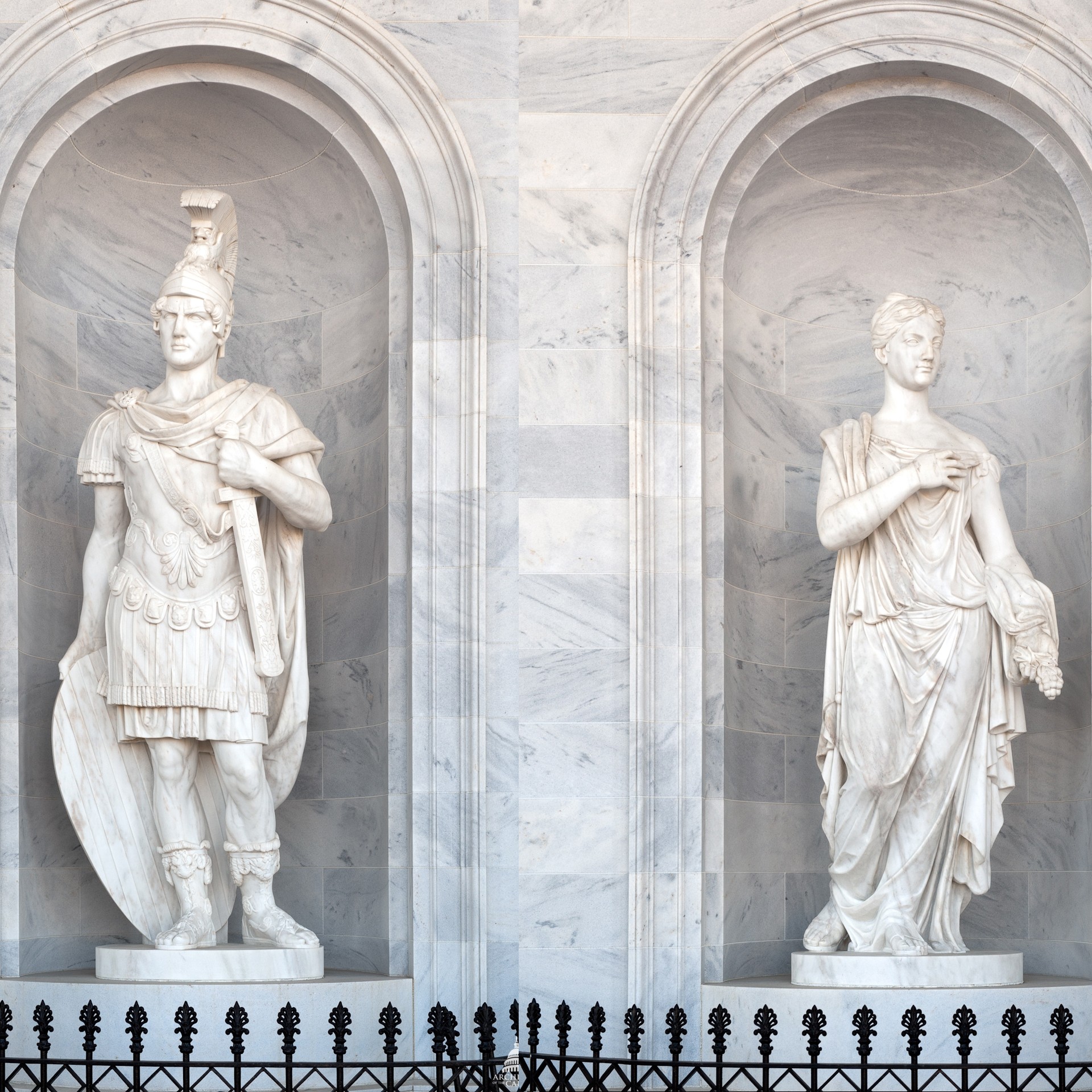
War and Peace are classical Roman figures crafted by E. Luigi Persico in 1834 out of Carrara marble. The statues serve as guardians at an entrance to the U.S. Capitol building. Both sculptures were replaced in 1960 due to deterioration.
The Genius of America
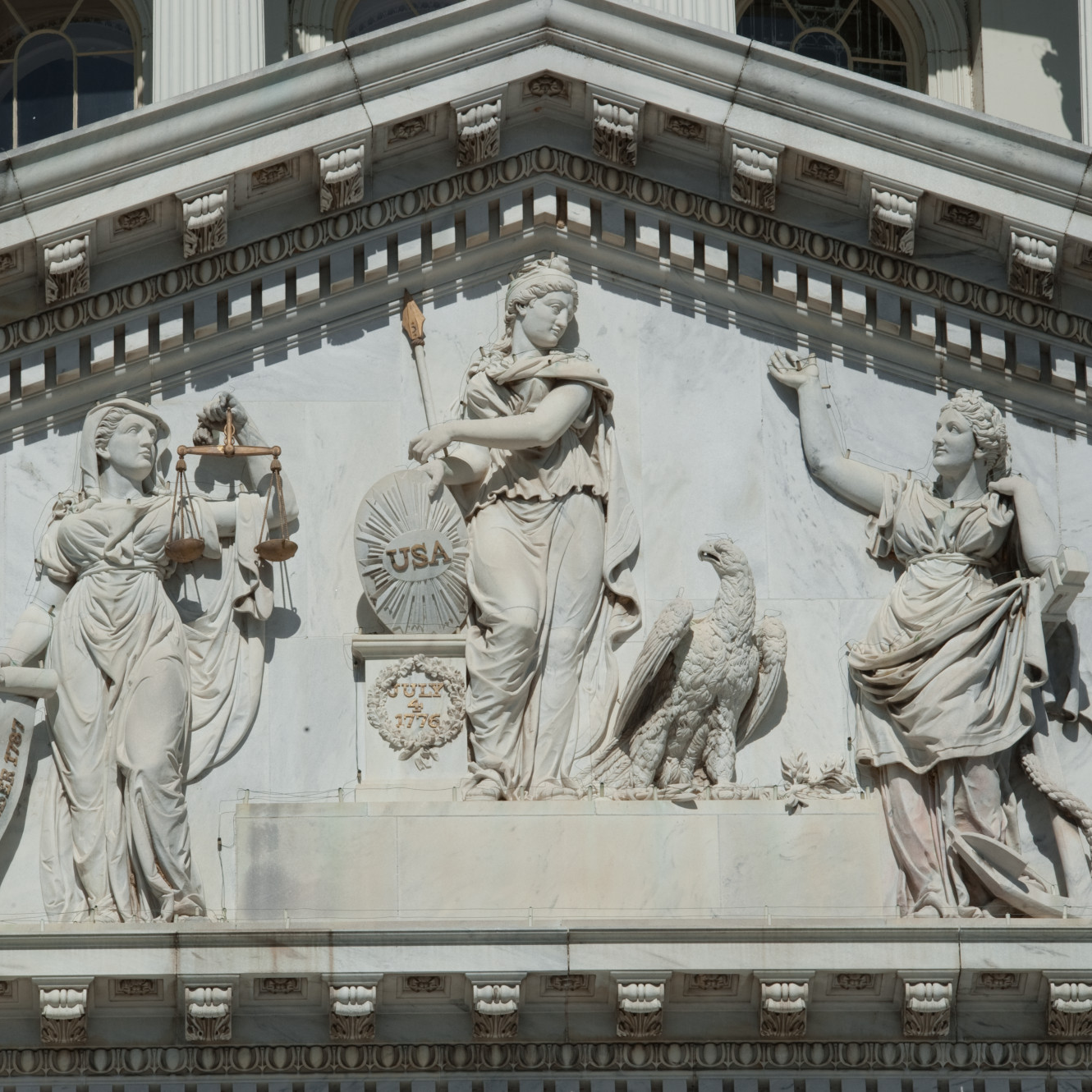
E. Luigi Persico's pediment at the U.S. Capitol was crafted in 1828 from sandstone. The design was influenced by President John Quincy Adams and features the female figures representing Justice, America, and Hope. The original was preserved in storage and replaced by a marble reproduction in 1962.
George Washington Memorial
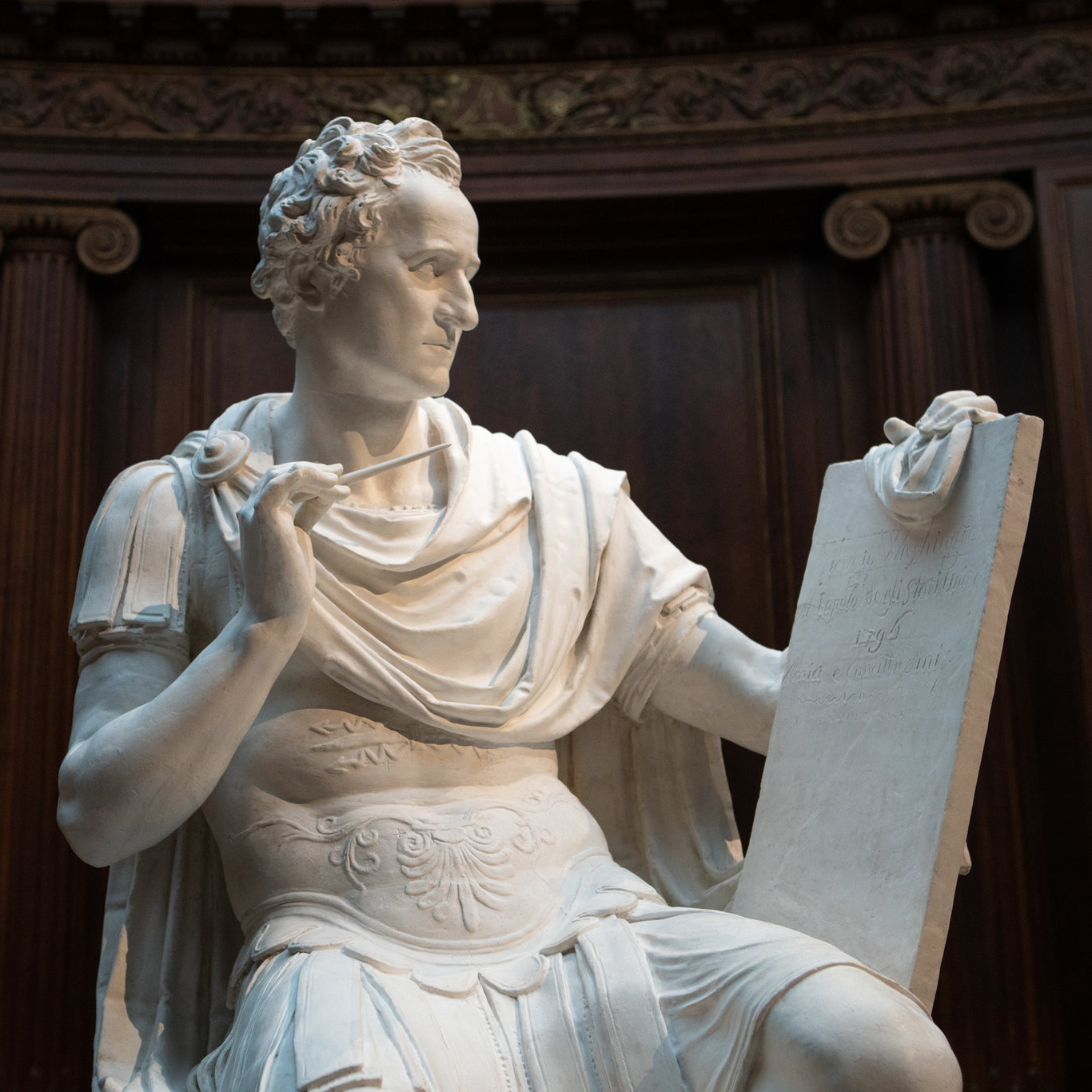
Antonio Canova designed the George Washington Memorial following the recommendation of Thomas Jefferson. The Carrara marble model of Washington, depicted in ancient Roman military armor, was crafted in 1821 but was destroyed in 1831. The existing replica was produced in 1970 by Romano Vio.
Christopher Columbus Monument
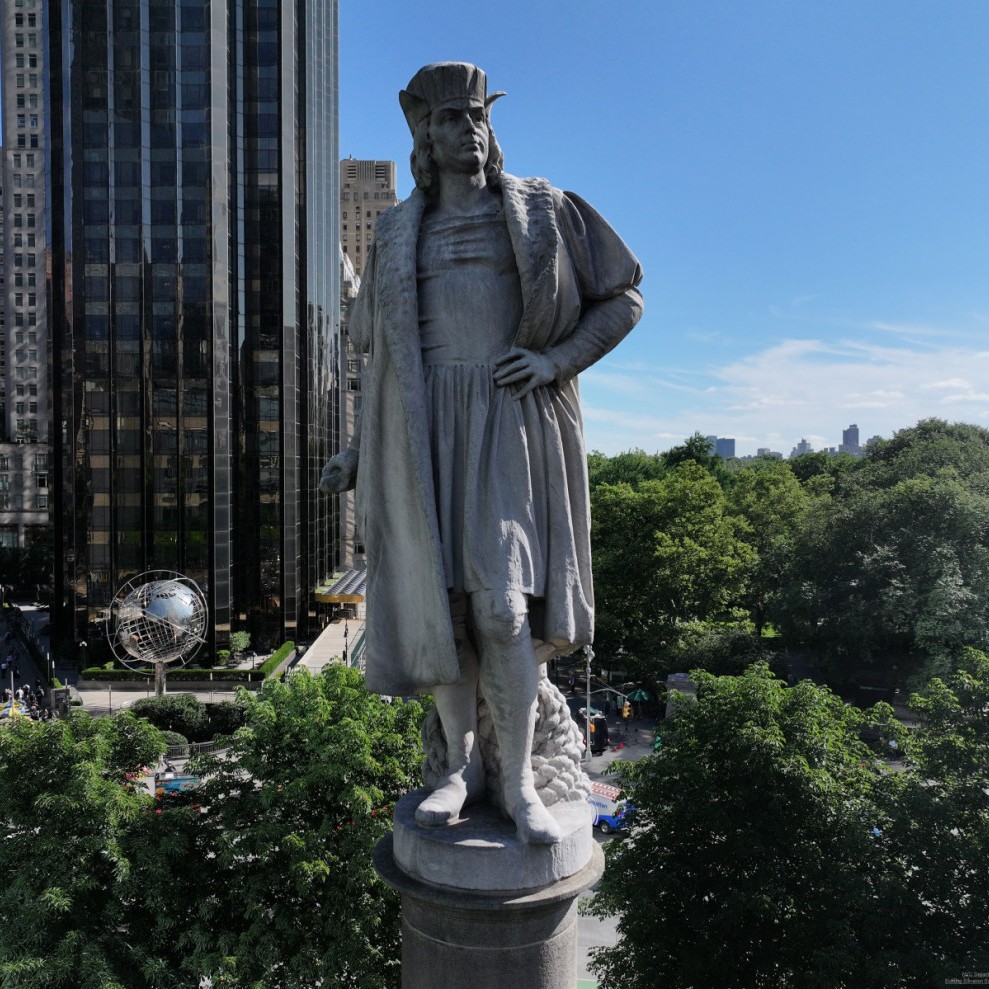
Gaetano Russo's Christopher Columbus Monument in New York City serves as the focal point of Columbus Circle. The monument features a Carrara marble statue of Columbus atop a granite base and pedestal. Unveiled in 1892, the city had the monument erected to commemorate the 400th anniversary of Columbus's expedition.
Monument to Giuseppe Verdi
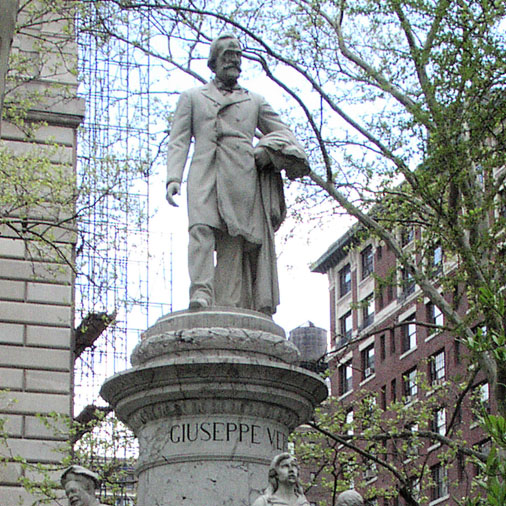
A monument commemorating the Italian composer Giuseppe Verdi was crafted by Pasquale Civiletti in 1906. It is situated in Verdi Square, New York City. The monument features a Carrara marble statue positioned atop a pedestal of dark granite, which also bears four statues depicting characters from Verdi's operas.
Browse all

< Previous page Next page >